
Career
20 Career Skills That Can Help You Stay Valuable at Work
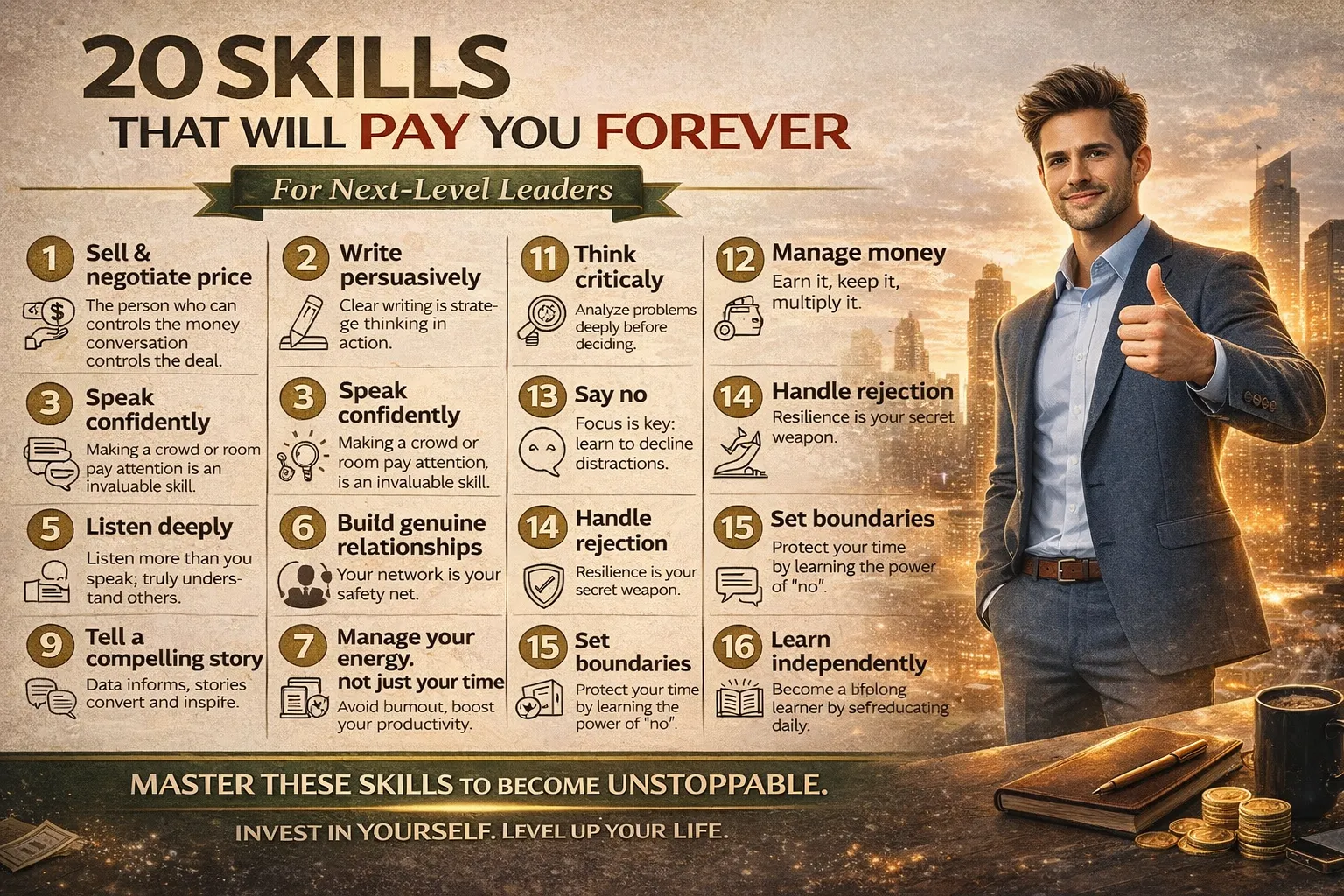
The job market keeps changing. New tools appear, old tasks become automated, and employers look for different skills as workplaces evolve. But some career skills remain useful across industries and job roles.
These skills can help you communicate better, solve problems, work with other people, handle change and take greater responsibility. They are useful whether you are starting your first job, changing careers or trying to progress in your current role.
Here are 20 career skills that can help you stay valuable at work and build a stronger long-term career.
1. Communication
Good communication helps you explain ideas, ask questions, share updates and avoid misunderstandings. It matters in almost every workplace.
Practise speaking clearly, writing concise emails and adjusting your communication to the person and situation.
2. Writing
Professional writing is more than grammar. You need to organise information so that people can understand what you mean quickly.
Emails, reports, proposals, CVs, presentations and project documents all benefit from clear writing.
3. Active Listening
Listening carefully can help you understand instructions, customer needs, team concerns and different points of view.
Instead of planning your reply while someone is speaking, focus on what they are saying and ask useful follow-up questions.
4. Problem-Solving
Employers value people who can look at a problem, identify the likely cause and work towards a practical solution.
Build this skill by breaking large problems into smaller parts, checking the available information and comparing possible solutions before acting.
5. Critical Thinking
Critical thinking helps you assess information instead of accepting every claim at face value. It is particularly useful when making decisions, reviewing data or evaluating advice.
Ask what evidence supports an idea, what information may be missing and what alternative explanations should be considered.
6. Adaptability
Workplaces change regularly. You may need to use new software, work with different teams, take on new responsibilities or adjust to a different process.
Being willing to adjust while continuing to perform your role can make career changes easier to manage.
7. Digital Skills
Most modern jobs require some level of digital confidence. The exact tools differ by industry, but basic skills with workplace software, online collaboration and digital information are widely useful.
Keep improving your digital skills as the tools used in your field change.
8. AI Literacy
Artificial intelligence is becoming part of many workplace workflows. You do not necessarily need to become an AI specialist, but understanding how AI tools work and where they can help can be useful.
Learn how to use relevant AI tools responsibly, check their output and protect confidential workplace information.
9. Time Management
Good time management helps you organise competing tasks and meet deadlines without constantly working in crisis mode.
Start by identifying important tasks, estimating how long they will take and setting realistic priorities.
10. Organisation
Being organised makes it easier to find information, track deadlines and keep work moving. Simple habits such as maintaining a task list, naming files consistently and recording important decisions can make a difference.
11. Teamwork
Most employees work with other people. Teamwork means sharing information, respecting different views, completing your responsibilities and helping the group reach its goal.
You do not have to agree with everyone to work effectively with them.
12. Negotiation
Negotiation is useful beyond salary discussions. You may need to agree deadlines, divide responsibilities, manage priorities or find solutions when people want different outcomes.
Good negotiation starts with understanding the other side before trying to persuade them.
13. Networking
Professional relationships can help you hear about opportunities, exchange knowledge and find people who can offer useful advice.
Networking does not have to mean collecting hundreds of contacts. Focus on building genuine professional relationships over time.
14. Emotional Awareness
Work can involve pressure, disagreement and difficult conversations. Being aware of your own reactions can help you respond more thoughtfully.
It is also useful to recognise that colleagues may approach the same situation differently.
15. Decision-Making
Every job involves decisions. Strong decision-making means understanding the objective, reviewing the available information, considering risks and choosing a practical next step.
Not every decision needs to be perfect. The goal is to make informed choices and adjust when new information becomes available.
16. Leadership
Leadership is not limited to managers. Employees can show leadership by taking responsibility, helping colleagues, communicating clearly and moving work forward.
Small examples of ownership can help you build leadership experience before taking on a formal management role.
17. Resilience
Career setbacks happen. You may receive a job rejection, miss a target, lose a promotion or face a difficult project.
Resilience means recovering, understanding what you can improve and continuing to move forward rather than allowing one setback to define your career.
18. Creativity
Creativity is useful when you need to find a new approach, improve a process or communicate an idea differently.
You do not need to work in a creative industry to benefit from creative thinking.
19. Learning Independently
Your employer cannot always teach you every skill you will need in the future. Independent learning helps you keep building your knowledge.
Use reliable courses, books, professional resources, practical projects and workplace experience to develop skills that support your career goals.
20. Professional Integrity
Trust is an important part of professional relationships. Being honest, keeping commitments, protecting confidential information and taking responsibility for mistakes can help you build a strong professional reputation.
Technical skills may help you get an opportunity, but professional behaviour can influence whether people want to work with you again.
How to Build These Career Skills
You do not need to master all 20 skills at once. Choose two or three that would make the biggest difference to your current career goal.
- Practise at work: Look for small opportunities to use the skill in real situations.
- Take on projects: Volunteer for tasks that help you build practical experience.
- Ask for feedback: Ask a manager, colleague or mentor what you could improve.
- Keep evidence: Record useful achievements, projects and results for future CV and interview preparation.
- Review your progress: Revisit your skills regularly and choose the next area to improve.
Which Career Skills Should You Prioritise?
The right skills depend on your role and career goals. A software developer may need strong problem-solving and technical skills, while a sales professional may place greater emphasis on communication and negotiation. A manager may need leadership, decision-making and conflict-management skills.
Start with the skills that appear repeatedly in job descriptions for the roles you want. This gives you a practical way to connect your development plan with your career plans.
Final Thoughts
There is no single skill that guarantees a successful career. The strongest approach is to build a combination of technical knowledge, communication, problem-solving, digital confidence and professional behaviour.
Technology and job titles will continue to change, but the ability to communicate, adapt, solve problems, work with others and keep improving can remain useful throughout your working life.


How to Start a Career in Sports and Leisure in the UK
A practical guide to sports and leisure careers in the UK, covering jobs, qualifications, apprenticeships, skills, experience, CVs and career...


How to Start a Career in Travel and Tourism in the UK
Travel and tourism is a broad career sector with opportunities in travel agencies, airports, airlines, visitor attractions, tours, hotels, heritage...


How to Start a Career in Property and Real Estate in the UK
Property and real estate is a broad career field covering residential property, commercial buildings, land, development, valuation, lettings, property management...


How to Start a Career in Hospitality in the UK
Thinking about hospitality as a career in the UK? Compare hotel, restaurant and guest service roles, entry routes, skills, apprenticeships...


How to Start a Career in Retail in the UK
Thinking about a retail career in the UK? Compare retail roles, entry routes, apprenticeships, skills, experience, CV tips and ways...


How to Start a Career in Science and Research in the UK
Planning a science or research career in the UK? Compare career paths, qualifications, apprenticeships, skills and practical ways to get...


How to Start a Career in Law in the UK
Thinking about a career in law? This guide explains UK legal career routes, qualifications, solicitor and barrister pathways, apprenticeships, skills,...


How to Start a Career in Education in the UK
Thinking about a career in education? Compare teaching and non-teaching roles, qualifications, apprenticeships, experience, skills and practical steps for getting...


How to Start a Career in Marketing in the UK
Marketing is a broad career field that combines communication, creativity, research, data and business thinking. It includes traditional marketing as...


How to Start a Career in Healthcare in the UK
Healthcare is one of the UK’s broadest career areas. It includes doctors and nurses, but also healthcare assistants, laboratory staff,...


How to Start a Career in Human Resources (HR) in the UK
Photo by Vitaly Gariev on Unsplash Human resources, usually called HR, is a people-focused career that combines communication, organisation, business...


How to Start a Career in Construction in the UK
Construction is one of the UK’s broadest career sectors. It includes hands-on trades such as bricklaying, carpentry and plumbing, as...


How to Start a Career in Energy and Utilities in the UK
Planning a career in energy and utilities in the UK? See job options, apprenticeships, qualifications, skills and practical steps to...


How to Start a Career in Media and Communications in the UK
Planning a media and communications career in the UK? Compare job options, entry routes, apprenticeships, skills, experience and practical steps...


How to Start a Career in Environmental and Sustainability Jobs in the UK
Environmental and sustainability careers are becoming an important part of many UK workplaces. Jobs in this area can involve protecting...


How to Start a Career in Cybersecurity in the UK
Thinking about a cybersecurity career in the UK? Here is a practical guide to skills, qualifications, entry-level roles, applications and...


How to Start a Career in Engineering in the UK
Thinking about engineering as a career in the UK? Here is a practical guide to engineering fields, qualifications, apprenticeships, skills,...


How to Start a Career in Government and Public Services in the UK
Thinking about a career in government or public services? This guide covers job options, entry routes, apprenticeships, skills, applications and...


Rolls-Royce Internship UK: Eligibility, Opportunities & How to Apply
Find Rolls-Royce internships in the UK with practical guidance on eligibility, opportunities, applications, assessments, skills and preparation.


How to Start a Career in Transport and Logistics in the UK
Planning a career in transport and logistics in the UK? See entry-level roles, apprenticeships, qualifications, skills and practical steps to...
-
 Career3 years ago
Flexible Jobs for Older Adults in the UK: 7 Career Options
-
 How-to8 months ago
How to Use Google Gemini for Freelance Work and Career Skills
-
 Jobs8 months ago
Second Jobs in the UK: 15 Practical Ways to Earn Extra Income
-

 Career2 years ago
Free Job Posting Sites in the UK: Options for Employers
-
 How-to8 months ago
How to Build Passive Income: 20 Income-Producing Assets for Long-Term Financial Growth
-

 AI & Tools8 months ago
How to Use Google Gemini for Productivity at Work
-

 Job Description3 years ago
Support Worker Job Description: Duties, Skills, Salary and Career Guide UK
-

 AI & Tools8 months ago
ChatGPT vs Microsoft Copilot: Which AI Is Best for You?