
Jobs
Job Guarantee Courses in the UK: How They Work & What to Check

Looking for a job can be challenging, especially when you are changing careers or entering a competitive field. Some UK training providers advertise courses with a job guarantee, usually meaning that eligible learners who meet specific conditions may receive recruitment support, a job offer or a refund of course fees. The exact promise depends on the provider’s written terms.
These programmes can be useful for graduates, career changers and people who need structured training, but a course should not be treated as an automatic route into employment. A genuine guarantee may have conditions covering attendance, assessments, job applications, interview participation, location, salary, time limits and the type of role offered. Read the full contract before paying.
This guide explains how job-guarantee programmes work, the types of training you may find, what to check before enrolling, and how to compare employment support, costs and guarantee conditions. It also separates commercial course guarantees from the UK Government’s separate Jobs Guarantee programme for eligible young people.
What Is a Job Guarantee Course?
Definition and Purpose:
The term job guarantee course is not a single regulated course category. It is commonly used by commercial training providers and course marketplaces to describe programmes that attach an employment promise or money-back condition to training. Current UK listings show examples where providers advertise a job or fee-refund promise, but the terms vary considerably. citeturn1search0
The practical value of these programmes depends on the training quality, employer connections, recruitment support and the learner’s own eligibility. A course that offers a guaranteed interview, recruitment support or work experience is different from one that contractually guarantees employment or refunds fees.
Popularity in the UK:
There are currently UK listings for job-guarantee programmes in areas such as IT, data, health and safety, teaching assistance and adult social care. However, availability, eligibility and guarantee conditions change, so readers should check the provider’s current offer rather than relying on an old course list. citeturn1search0
Costs and study formats vary widely. Do not assume that a job-guarantee course is cheaper than a degree or other training route; compare the total fee, payment terms, qualification, support and likely return before enrolling.
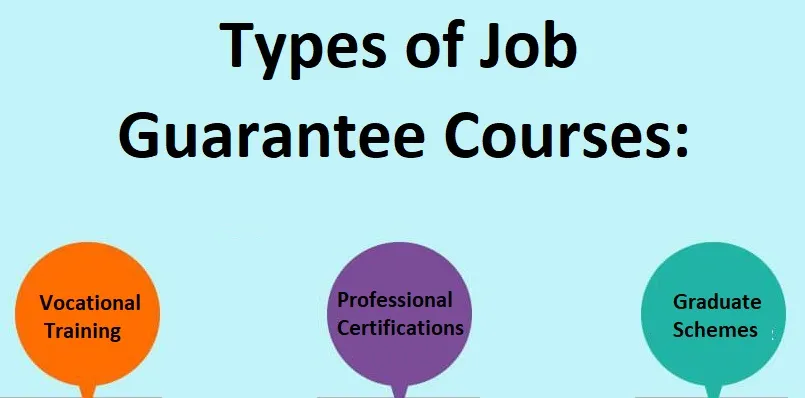
Types of Job Guarantee Courses:
If you are looking for job guarantee courses in the UK, there are various types of courses that you can consider. Here are some of the most common types:
Vocational Training:
Vocational training courses are designed to provide you with the skills and knowledge needed for a specific job or industry. These courses are often hands-on and practical, and they may include on-the-job training or an apprenticeship. Some examples of vocational training courses that offer job guarantees include:
- Plumbing and heating
- Electrical installation
- Carpentry and joinery
- Hairdressing and beauty therapy
- Health and social care
Professional Certifications:
Professional certifications are qualifications that demonstrate your expertise in a particular field. These certifications are often required by employers, and they can help you stand out from other candidates when applying for jobs. Some examples of professional certifications that offer job guarantees include:
- Chartered Institute of Marketing (CIM)
- Association of Chartered Certified Accountants (ACCA)
- Chartered Institute of Management Accountants (CIMA)
- Project Management Professional (PMP)
- Certified Information Systems Security Professional (CISSP)
Graduate Schemes:
Graduate schemes are programmes offered by employers that provide recent graduates with training and experience in a particular industry. These programmes typically last for one to two years, and they may include on-the-job training, mentoring, and professional development opportunities. Some examples of graduate schemes include:
- Deloitte Graduate Scheme
- PwC Graduate Scheme
- KPMG Graduate Scheme
- Teach First Leadership Development Programme
- Civil Service Fast Stream
By considering these types of courses, you can increase your chances of finding a job in your desired field.

Fields Where Job-Guarantee Programmes Are Advertised
Job-guarantee programmes are advertised across several fields, but a course in a high-demand sector does not by itself guarantee employment. Always check the specific provider’s current terms, the role covered and the conditions you must meet.
Information Technology:
IT and digital training is one area where commercial providers advertise job-guarantee programmes. Examples can include software development, cybersecurity, data and networking. Current listings include programmes marketed with employment or fee-refund promises, subject to provider terms. citeturn1search0
- Software Engineering
- Cybersecurity
- Data Science
- Cloud Computing
Completing these courses can provide you with the necessary skills and knowledge to secure a job in the IT industry.
Healthcare:
Health and social care training is another area where job-guarantee programmes are advertised. Be particularly careful with regulated healthcare professions: completing a short course does not automatically give someone the professional registration or qualifications required for regulated practice.
- Nursing
- Occupational Therapy
- Physiotherapy
- Radiography
Completing these courses can provide you with the necessary skills and knowledge to secure a job in the healthcare industry.
Engineering:
Engineering and technical training can support entry into some roles, but professional engineering careers often require specific qualifications, experience or professional registration. Do not treat a general course guarantee as a substitute for those requirements.
- Civil Engineering
- Mechanical Engineering
- Electrical Engineering
- Chemical Engineering
Completing these courses can provide you with the necessary skills and knowledge to secure a job in the engineering industry.
Education:
Education and teaching-assistant programmes are also advertised with recruitment support or job-guarantee features. Teaching itself is a regulated profession with specific qualification routes, so check whether a course actually leads to the role you want.
- Primary Education
- Secondary Education
- Special Education Needs (SEN)
- Early Years Education
Completing these courses can provide you with the necessary skills and knowledge to secure a job in the education industry.
In conclusion, by completing job guarantee courses in these key industries, you can increase your chances of securing a job in a rapidly growing industry.
Providers and Programmes: Check the Actual Guarantee
It is safer to avoid describing universities or training companies as offering a blanket “job guarantee” unless the specific programme’s current terms say so. A university may provide careers support, placements or employer links without guaranteeing a job. Private providers may advertise guarantees with detailed eligibility conditions.
University Programmes:
Universities can offer careers services, placements and graduate opportunities, but those services should not automatically be described as a job guarantee. Check the exact programme and university terms before making a decision.
- University of Cambridge: The University of Cambridge offers a range of job guarantee courses in fields such as engineering, computer science, and business management. These courses are designed to provide students with the skills and knowledge they need to succeed in their chosen field.
- University of Oxford: The University of Oxford is another top institution that provides job guarantee courses. These courses are available in fields such as law, medicine, and economics, and are designed to prepare students for successful careers in their chosen field.
- Imperial College London: Imperial College London is known for its job guarantee courses in science, engineering, and medicine. These courses are designed to provide students with the skills and knowledge they need to succeed in their chosen field.
Private Training Providers:
Private training providers and course marketplaces do advertise programmes with job-guarantee features. For example, current listings include programmes from providers offering employment promises or fee-refund conditions. These should be compared by reading the full terms rather than by relying on the headline guarantee. citeturn1search0
- QA: QA is a leading provider of job guarantee courses in fields such as IT, project management, and business analysis. These courses are designed to provide students with the skills and knowledge they need to succeed in their chosen field.
- The Knowledge Academy: The Knowledge Academy offers job guarantee courses in fields such as cybersecurity, data science, and digital marketing. These courses are designed to provide students with the skills and knowledge they need to secure a job in their chosen field.
Before enrolling, compare the qualification, employer links, recruitment support, guarantee wording, refund conditions, total cost and realistic job outcomes. A guarantee is only as useful as the conditions attached to it.
Eligibility and Admission Criteria
Before enrolling in any course, you must meet certain eligibility criteria. These requirements may vary depending on the course and the institution offering it.
There is no single eligibility rule because each programme sets its own requirements. Depending on the course, you may need a certain level of education, English-language ability, work experience, technical knowledge, age, right-to-work status or access to a suitable computer and internet connection.
In addition to educational qualifications, you may also need to meet certain admission criteria. This may include submitting an application form, attending an interview, or providing references.
It is important to carefully review the eligibility and admission criteria for each course before applying. This will ensure that you meet the requirements and have the best chance of being accepted onto the course.
Some programmes may also have specific requirements related to language proficiency, work experience or other skills. If you are preparing for a career change, also see our CV guide for applicants with no experience.
Check both the course admission requirements and the separate guarantee eligibility requirements. They may not be identical.
Financial Considerations:
Course Fees:
It’s important to consider the cost of tuition fees, the fees can vary depending on the course and institution, so it’s worth doing your research to find the best option for you. Keep in mind that some courses may offer a higher tuition fee, but may also provide additional resources and support to help you secure a job after graduation.
Scholarships and Funding:
If you’re worried about the cost of tuition fees, there are various scholarships and funding options available to help you cover the costs. Many universities and institutions offer scholarships and bursaries to students based on academic merit, financial need, or other criteria. You can also explore government-funded options such as student loans or grants.
It’s important to note that scholarships and funding options may have specific eligibility requirements, so be sure to check the details before applying. Additionally, it’s worth considering the terms and conditions of any funding you receive, as some may require you to meet certain academic or employment targets after graduation.
Overall, by carefully considering the financial aspects and exploring funding options, you can make an informed decision about the best course for you.
Employment Outcomes: What to Check
Be careful with published success rates. A provider may define “success” differently from another provider, and an advertised employment percentage may not represent every learner who enrolled. Ask how the figure was calculated, the period covered, who was included and whether employment was directly related to the course.
Software Development Bootcamps:
Software development bootcamps have become increasingly popular in recent years, offering a fast and intensive way to learn coding skills. The success rates of these bootcamps vary, but many claim to have success rates of over 90%. Graduates of these bootcamps can expect to find employment as software developers, with starting salaries ranging from £25,000 to £40,000.
Data Science Courses:
Data and analytics courses can cover statistics, spreadsheets, SQL, programming and data visualisation. Check whether the programme prepares you for entry-level roles and whether the guarantee covers a specific job family or simply provides recruitment support.
Cybersecurity Courses:
Cybersecurity training can cover networking, security principles, monitoring and practical projects. Entry-level roles can still require technical knowledge, certifications or experience, so check what the programme actually includes before assuming that completion will lead directly to employment.
A job-guarantee programme can be one option for structured career training, but the guarantee should be evaluated as a contract rather than a marketing slogan. Compare the actual employment promise, exclusions, refund process and learner obligations before paying.

How to Compare a Job Guarantee Course Before Paying
Use this checklist before enrolling:
- Read the complete guarantee terms, not just the advert.
- Check exactly what is guaranteed: a job, interview, placement, recruitment support or refund.
- Check the deadline for meeting the guarantee conditions.
- Check whether you must apply for a minimum number of jobs or accept reasonable offers.
- Check location, salary, working pattern and role restrictions.
- Confirm which costs are refundable and which are excluded.
- Ask how recent employment-outcome figures were calculated.
- Verify the qualification and whether it is recognised or regulated where relevant.
- Check the provider’s cancellation and complaints process.
1. Increased Emphasis on Soft Skills:
Employers are increasingly looking for candidates who possess a range of soft skills, such as communication, problem-solving, and teamwork. In response, job guarantee courses are likely to place a greater emphasis on developing these skills alongside more technical skills.
2. Integration of Emerging Technologies:
As new technologies emerge, job guarantee courses will need to keep up in order to remain relevant. This may involve incorporating training on emerging technologies such as artificial intelligence, blockchain, and virtual reality.
3. Customisation and Personalisation:
In order to better meet the needs of individual learners, these courses may become more customisable and personalised. This could involve offering learners a range of options to tailor their learning experience to their specific needs and preferences.
4. Greater Collaboration with Employers:
To ensure that job guarantee courses are meeting the needs of employers, there may be increased collaboration between course providers and employers. This could involve employers providing input on course content, offering work placements or internships, and even funding courses for their employees.
For eligible young people, the UK Government also has a separate Jobs Guarantee programme. GOV.UK describes this as a government-funded paid job for eligible young people who meet the programme conditions; it is not the same thing as a commercial course that advertises a job or money-back guarantee. The national programme is being rolled out in 2026. See the current GOV.UK Jobs Guarantee guidance.
If you are comparing training routes, also consider apprenticeships and other funded employment programmes where relevant. GOV.UK lists schemes that combine training, work experience and employment support.


How to Start a Career in Sports and Leisure in the UK
A practical guide to sports and leisure careers in the UK, covering jobs, qualifications, apprenticeships, skills, experience, CVs and career...


How to Start a Career in Travel and Tourism in the UK
Travel and tourism is a broad career sector with opportunities in travel agencies, airports, airlines, visitor attractions, tours, hotels, heritage...


How to Start a Career in Property and Real Estate in the UK
Property and real estate is a broad career field covering residential property, commercial buildings, land, development, valuation, lettings, property management...


How to Start a Career in Hospitality in the UK
Thinking about hospitality as a career in the UK? Compare hotel, restaurant and guest service roles, entry routes, skills, apprenticeships...


How to Start a Career in Retail in the UK
Thinking about a retail career in the UK? Compare retail roles, entry routes, apprenticeships, skills, experience, CV tips and ways...


How to Start a Career in Science and Research in the UK
Planning a science or research career in the UK? Compare career paths, qualifications, apprenticeships, skills and practical ways to get...


How to Start a Career in Law in the UK
Thinking about a career in law? This guide explains UK legal career routes, qualifications, solicitor and barrister pathways, apprenticeships, skills,...


How to Start a Career in Education in the UK
Thinking about a career in education? Compare teaching and non-teaching roles, qualifications, apprenticeships, experience, skills and practical steps for getting...


How to Start a Career in Marketing in the UK
Marketing is a broad career field that combines communication, creativity, research, data and business thinking. It includes traditional marketing as...


How to Start a Career in Healthcare in the UK
Healthcare is one of the UK’s broadest career areas. It includes doctors and nurses, but also healthcare assistants, laboratory staff,...


How to Start a Career in Human Resources (HR) in the UK
Photo by Vitaly Gariev on Unsplash Human resources, usually called HR, is a people-focused career that combines communication, organisation, business...


How to Start a Career in Construction in the UK
Construction is one of the UK’s broadest career sectors. It includes hands-on trades such as bricklaying, carpentry and plumbing, as...


How to Start a Career in Energy and Utilities in the UK
Planning a career in energy and utilities in the UK? See job options, apprenticeships, qualifications, skills and practical steps to...


How to Start a Career in Media and Communications in the UK
Planning a media and communications career in the UK? Compare job options, entry routes, apprenticeships, skills, experience and practical steps...


How to Start a Career in Environmental and Sustainability Jobs in the UK
Environmental and sustainability careers are becoming an important part of many UK workplaces. Jobs in this area can involve protecting...


How to Start a Career in Cybersecurity in the UK
Thinking about a cybersecurity career in the UK? Here is a practical guide to skills, qualifications, entry-level roles, applications and...


How to Start a Career in Engineering in the UK
Thinking about engineering as a career in the UK? Here is a practical guide to engineering fields, qualifications, apprenticeships, skills,...


How to Start a Career in Government and Public Services in the UK
Thinking about a career in government or public services? This guide covers job options, entry routes, apprenticeships, skills, applications and...


Rolls-Royce Internship UK: Eligibility, Opportunities & How to Apply
Find Rolls-Royce internships in the UK with practical guidance on eligibility, opportunities, applications, assessments, skills and preparation.


How to Start a Career in Transport and Logistics in the UK
Planning a career in transport and logistics in the UK? See entry-level roles, apprenticeships, qualifications, skills and practical steps to...
-
 Career3 years ago
Flexible Jobs for Older Adults in the UK: 7 Career Options
-
 How-to8 months ago
How to Use Google Gemini for Freelance Work and Career Skills
-
 Jobs8 months ago
Second Jobs in the UK: 15 Practical Ways to Earn Extra Income
-

 Career2 years ago
Free Job Posting Sites in the UK: Options for Employers
-
 How-to8 months ago
How to Build Passive Income: 20 Income-Producing Assets for Long-Term Financial Growth
-

 AI & Tools8 months ago
How to Use Google Gemini for Productivity at Work
-

 Job Description3 years ago
Support Worker Job Description: Duties, Skills, Salary and Career Guide UK
-

 AI & Tools8 months ago
ChatGPT vs Microsoft Copilot: Which AI Is Best for You?