
Interview Guide
CV vs Résumé: What Is the Difference for UK Job Seekers?
Understand the difference between a CV and a résumé, what UK employers usually expect and when a CV or résumé is used for job applications.
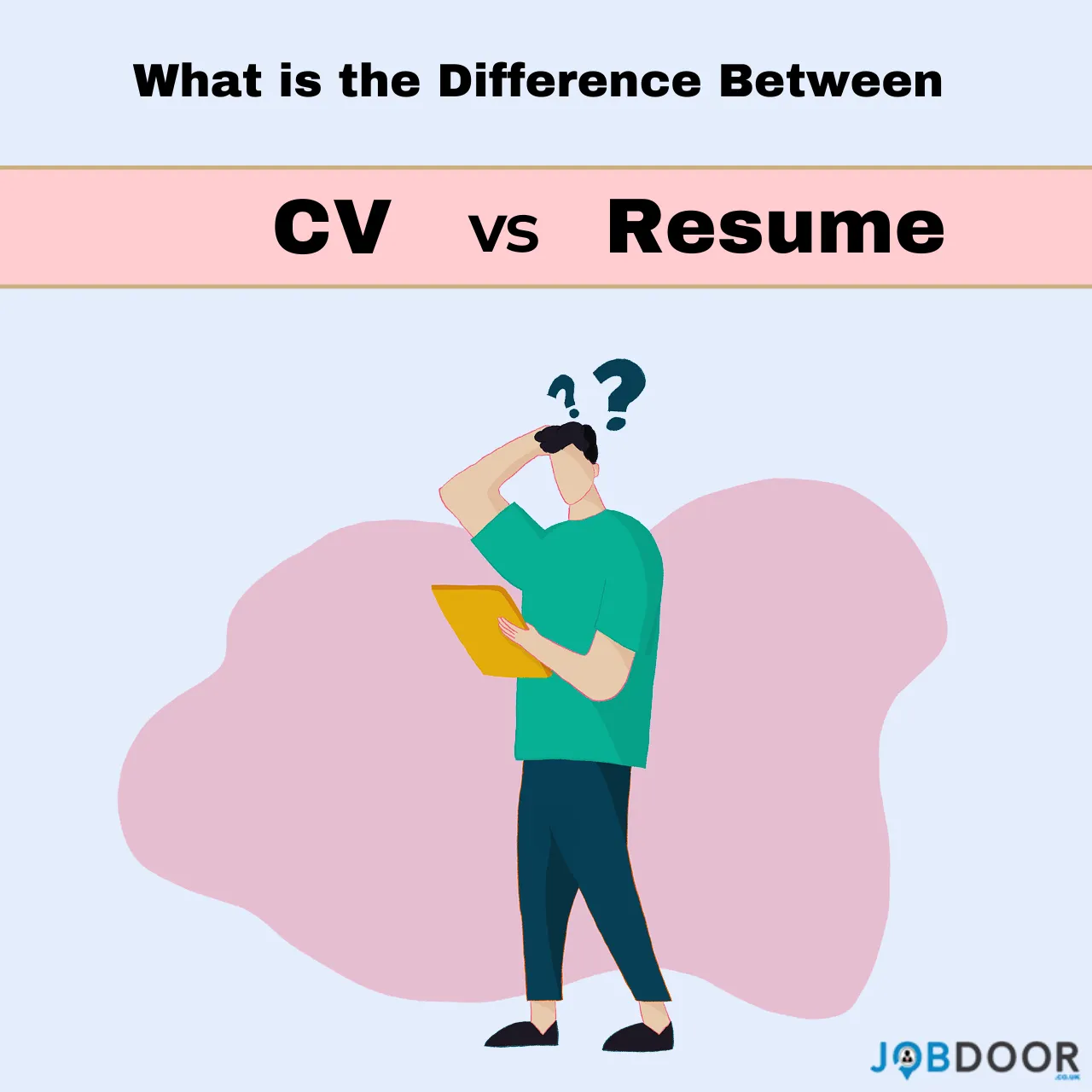
CV and résumé are often used as if they mean exactly the same thing. In practice, the meaning can depend on the country, industry and type of position.
For UK job seekers, the most important point is simple: when an employer asks for a CV, they usually want a clear summary of your relevant experience, skills and qualifications. In the United States and some other countries, a résumé is more commonly used for standard job applications, while a CV can have a more detailed academic or professional meaning.
This guide explains the difference and helps you understand which document an employer is likely to expect.
What Is the Difference Between a CV and a Résumé?
For UK job applications, the document you normally need is a CV. The National Careers Service describes a CV as a summary of your skills, achievements and experience used when applying for jobs.
For most UK job applications, the document you need is a CV. The National Careers Service provides UK-specific CV guidance and recommends tailoring your application to the role and employer.
For most UK job applications, employers use CV for the document that summarises your relevant skills, experience and education. A US-style résumé is usually similar for standard employment applications, while an academic CV can be much more detailed.
| CV | Résumé |
|---|---|
| Common term for job applications in the UK | Common term for standard job applications in the United States |
| Usually presents relevant experience, education and skills | Usually presents a concise summary tailored to a specific role |
| Meaning can vary internationally | Meaning is more strongly associated with the US job market |
| Academic CVs can be much longer and more detailed | Usually shorter and focused on relevant experience |
What Does CV Mean in the UK?
In the UK, a CV is the normal document used for job applications. The National Careers Service recommends keeping it clear, easy to read and tailored to the role.
In the UK, CV is the normal term used by many employers and job seekers. A standard job CV usually includes your contact details, personal profile, work experience, education and relevant skills.
It is not always a complete record of everything you have ever done. A good CV is normally focused on the information that helps an employer understand your suitability for the role.
For a complete guide, see How to Write a CV for a Job in the UK.
What Is a Résumé?
A résumé is generally a concise document that highlights the experience, achievements, education and skills most relevant to a particular job. The term is especially common in the United States.
When applying internationally, always read the employer’s instructions carefully. The same word can be used differently in different countries.
Is a CV Longer Than a Résumé?
There is no universal rule that a UK employment CV must be longer than a résumé. Length should depend on the role and the relevant evidence you need to present. For UK applications, focus on relevant skills and experience rather than adding unnecessary detail.
Not always. The answer depends on what type of CV is being discussed.
Standard Job CV
A standard CV for a job application is often kept focused and concise. The appropriate length depends on your experience and the requirements of the role.
Academic or Research CV
An academic CV can be much more detailed. It may include research experience, publications, conference presentations, grants, teaching experience, professional memberships and other academic achievements.
Résumé
A résumé is usually designed as a concise summary of the qualifications most relevant to the position.
What Should You Include in a UK CV?
A practical UK CV should be clear, easy to scan and tailored to the vacancy. Include relevant contact details, a short introduction, education, work experience and skills. For a full step-by-step structure, see our UK CV writing guide.
Focus on relevant work experience, education, skills and achievements. If you have limited experience, volunteering and placements can also demonstrate useful skills.
Include relevant contact details, a short introduction, education, work history and useful skills or achievements. If you have limited paid experience, volunteering, placements, projects and other relevant experience can still demonstrate useful skills.
For a complete structure, see our UK CV writing guide.
- Contact information
- A short personal profile where appropriate
- Relevant work experience
- Education and qualifications
- Relevant skills
- Certifications, projects or professional information when useful
The exact structure should reflect your experience and the job you are applying for.
What Should You Include in a Résumé?
The exact format depends on the country, industry and employer. If you are applying for UK jobs, do not switch to a US-style résumé simply because the word appears in the vacancy or online advice.
- Contact information
- A professional summary where appropriate
- Relevant work experience
- Key achievements
- Education
- Skills relevant to the role
Because a résumé is usually targeted to a specific role, irrelevant information is often reduced or removed.
Which One Should You Use?
If you are applying for a UK vacancy, start with a UK-style CV rather than assuming the terminology or format used in another country applies. You can also see our UK job-search guide.
If the vacancy is in the UK and asks for a CV, use a UK-style employment CV unless the employer gives different instructions. For US applications, follow the employer’s terminology and requirements. For academic roles, check whether a detailed academic CV is requested.
Applying for a Job in the UK
Use a CV unless the employer specifically asks for something else.
Applying for a Job in the United States
A résumé is usually expected for many standard job applications. Academic and research roles may require a CV.
Applying Internationally
Follow the terminology and instructions in the job advert rather than assuming that the terms mean the same thing everywhere.
Should You Tailor Both Documents?
Yes. Tailoring matters more than the label. Match your strongest skills and experience to the job advert and remove information that does not help your application. You can also review our guide to what to look for in a job description.
Yes. Match your skills and experience to the wording of the vacancy. Our job description guide can help you identify what the employer is asking for.
Yes. Tailoring matters more than the label on the document. Match your relevant skills and experience to the job advert and remove information that does not support the application.
Our guide to what to look for in a job description can help you identify the employer’s requirements.
Yes. Whether you call the document a CV or a résumé, the strongest version should make your most relevant experience easy for the employer to find.
Review the job description, identify the main requirements and make sure your genuine skills and experience are clearly connected to them.
Common Misunderstandings About CVs and Résumés
Do not assume that a CV is automatically several pages long or that a résumé must always be one page. The right length depends on your experience and the requirements of the role. If you are starting your career, our CV guide for applicants with no experience may be useful.
The most useful approach is to focus less on the label and more on whether your application clearly demonstrates the skills and experience relevant to the role.
Do not assume that the word ‘résumé’ automatically means a shorter document or that every CV should contain every detail of your career. The right format depends on the country, type of role and employer instructions.
A CV Is Always Longer
This is not always true. A standard UK job CV can be concise, while an academic CV may be considerably longer.
A Résumé Is Only for Beginners
No. Experienced professionals also use résumés. The difference is primarily about the job market and the type of document expected, not simply how experienced someone is.
You Never Need to Tailor a CV
Even when a CV is used for several applications, the most relevant sections should be reviewed and adjusted for the role.
Frequently Asked Questions
If you are applying internationally, always check the employer’s instructions rather than relying on a generic CV-versus-résumé rule. For a UK job search, our complete UK job-search guide covers the wider application process.
If you are preparing your first CV, our CV guide for applicants with no experience covers education, skills, projects and volunteering.
If you are preparing a UK application, you can also review our CV guide for applicants with no experience and our common CV mistakes guide.
Is a CV the Same as a Résumé?
They can serve a similar purpose, but the terms are used differently across countries and industries. In the UK, CV is commonly used for standard job applications.
Should I Send a CV or Résumé for a UK Job?
For most UK job applications, send a CV unless the employer asks for a different document.
Can a CV Be One Page?
Yes. The right length depends on your experience and the amount of relevant information you need to present clearly.
What Is an Academic CV?
An academic CV is a detailed record used for academic, research and some specialist professional roles. It may include publications, research, teaching, conferences and other achievements.
Final Thoughts
For most UK job applications, use a tailored CV and focus on the evidence that matches the role. Once your CV is ready, make sure your interview preparation supports the same story. Our job interview preparation guide can help with the next stage.
The difference between a CV and a résumé is largely about context. For most job seekers in the UK, the practical priority is writing a clear, accurate and relevant CV that matches the role being targeted.
Before sending your application, review our guide to CV mistakes that can stop you getting an interview.





How to Start a Career in Sports and Leisure in the UK
A practical guide to sports and leisure careers in the UK, covering jobs, qualifications, apprenticeships, skills, experience, CVs and career...


How to Start a Career in Travel and Tourism in the UK
Travel and tourism is a broad career sector with opportunities in travel agencies, airports, airlines, visitor attractions, tours, hotels, heritage...


How to Start a Career in Property and Real Estate in the UK
Property and real estate is a broad career field covering residential property, commercial buildings, land, development, valuation, lettings, property management...


How to Start a Career in Hospitality in the UK
Thinking about hospitality as a career in the UK? Compare hotel, restaurant and guest service roles, entry routes, skills, apprenticeships...


How to Start a Career in Retail in the UK
Thinking about a retail career in the UK? Compare retail roles, entry routes, apprenticeships, skills, experience, CV tips and ways...


How to Start a Career in Science and Research in the UK
Planning a science or research career in the UK? Compare career paths, qualifications, apprenticeships, skills and practical ways to get...


How to Start a Career in Law in the UK
Thinking about a career in law? This guide explains UK legal career routes, qualifications, solicitor and barrister pathways, apprenticeships, skills,...


How to Start a Career in Education in the UK
Thinking about a career in education? Compare teaching and non-teaching roles, qualifications, apprenticeships, experience, skills and practical steps for getting...


How to Start a Career in Marketing in the UK
Marketing is a broad career field that combines communication, creativity, research, data and business thinking. It includes traditional marketing as...


How to Start a Career in Healthcare in the UK
Healthcare is one of the UK’s broadest career areas. It includes doctors and nurses, but also healthcare assistants, laboratory staff,...


How to Start a Career in Human Resources (HR) in the UK
Photo by Vitaly Gariev on Unsplash Human resources, usually called HR, is a people-focused career that combines communication, organisation, business...


How to Start a Career in Construction in the UK
Construction is one of the UK’s broadest career sectors. It includes hands-on trades such as bricklaying, carpentry and plumbing, as...


How to Start a Career in Energy and Utilities in the UK
Planning a career in energy and utilities in the UK? See job options, apprenticeships, qualifications, skills and practical steps to...


How to Start a Career in Media and Communications in the UK
Planning a media and communications career in the UK? Compare job options, entry routes, apprenticeships, skills, experience and practical steps...


How to Start a Career in Environmental and Sustainability Jobs in the UK
Environmental and sustainability careers are becoming an important part of many UK workplaces. Jobs in this area can involve protecting...


How to Start a Career in Cybersecurity in the UK
Thinking about a cybersecurity career in the UK? Here is a practical guide to skills, qualifications, entry-level roles, applications and...


How to Start a Career in Engineering in the UK
Thinking about engineering as a career in the UK? Here is a practical guide to engineering fields, qualifications, apprenticeships, skills,...


How to Start a Career in Government and Public Services in the UK
Thinking about a career in government or public services? This guide covers job options, entry routes, apprenticeships, skills, applications and...


Rolls-Royce Internship UK: Eligibility, Opportunities & How to Apply
Find Rolls-Royce internships in the UK with practical guidance on eligibility, opportunities, applications, assessments, skills and preparation.


How to Start a Career in Transport and Logistics in the UK
Planning a career in transport and logistics in the UK? See entry-level roles, apprenticeships, qualifications, skills and practical steps to...
-
 Career3 years ago
Flexible Jobs for Older Adults in the UK: 7 Career Options
-
 How-to8 months ago
How to Use Google Gemini for Freelance Work and Career Skills
-
 Jobs8 months ago
Second Jobs in the UK: 15 Practical Ways to Earn Extra Income
-

 Career2 years ago
Free Job Posting Sites in the UK: Options for Employers
-
 How-to8 months ago
How to Build Passive Income: 20 Income-Producing Assets for Long-Term Financial Growth
-

 AI & Tools8 months ago
How to Use Google Gemini for Productivity at Work
-

 Job Description3 years ago
Support Worker Job Description: Duties, Skills, Salary and Career Guide UK
-

 AI & Tools8 months ago
ChatGPT vs Microsoft Copilot: Which AI Is Best for You?