
Career
Hard Skills vs Soft Skills: Key Differences and Why You Need Both
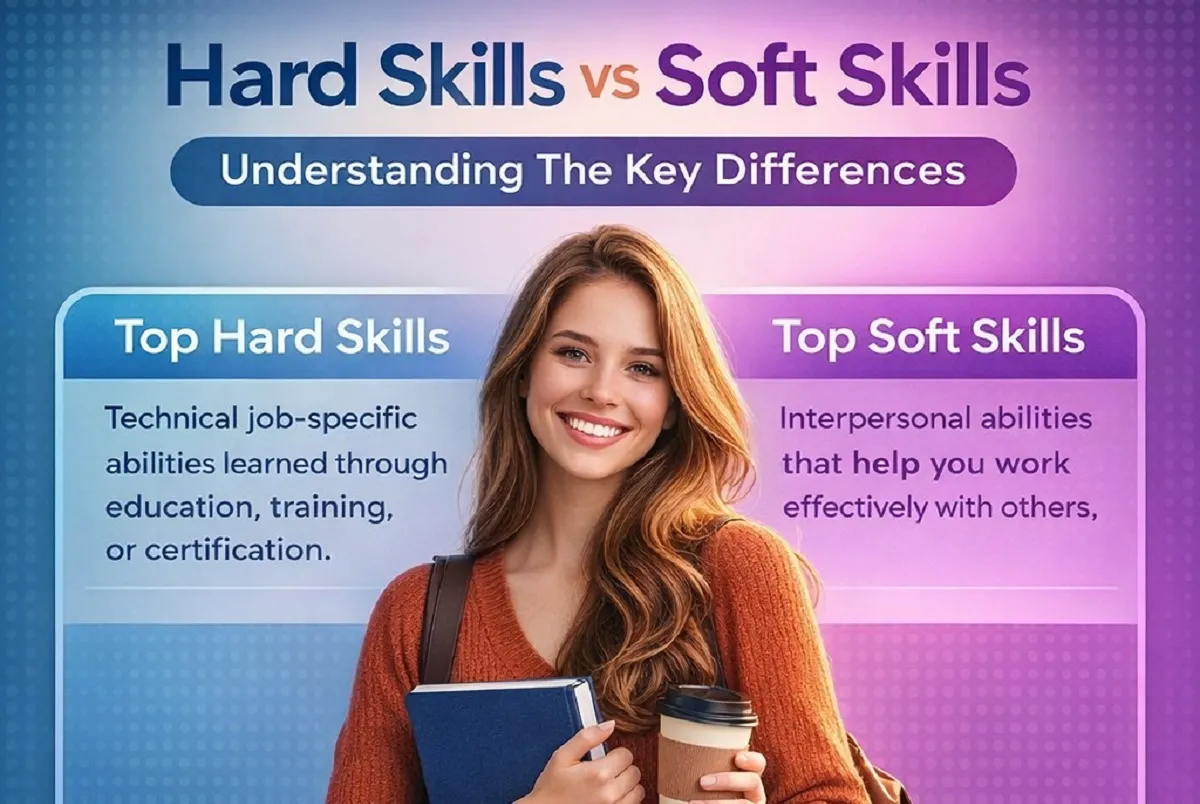
When employers assess a candidate, they usually look at more than qualifications alone. They want to know whether you have the practical knowledge needed for the role and whether you can communicate, work with others and handle everyday workplace situations.
These two areas are commonly described as hard skills and soft skills. Understanding the difference can help you choose what to develop, explain your abilities more clearly and present stronger evidence in job applications and interviews.
What Are Hard Skills?
Hard skills are specific abilities or knowledge used to perform particular tasks. They are often learned through education, training or practical experience and can usually be demonstrated through qualifications, tests, projects or previous work.
Examples of hard skills
- Data analysis
- Accounting and bookkeeping
- Software development
- Digital marketing
- Graphic design
- Foreign language proficiency
- Cybersecurity
- Project management tools
- Technical writing
- Industry-specific equipment or systems
What Are Soft Skills?
Soft skills are the behaviours and interpersonal abilities that affect how you work. They influence how you communicate, collaborate, solve problems and respond to different situations.
Examples of soft skills
- Communication
- Teamwork
- Problem-solving
- Time management
- Adaptability
- Listening
- Organisation
- Decision-making
- Leadership
- Conflict management
Hard Skills vs Soft Skills: Key Differences
| Area | Hard Skills | Soft Skills |
|---|---|---|
| Main focus | Knowledge and task-specific ability | Behaviour and working with people |
| How they develop | Training, education and practice | Practice, feedback and experience |
| How they are demonstrated | Qualifications, projects, tests and work | Examples of behaviour and results |
| Transferability | May be role or industry specific | Often useful across many roles |
Why Employers Need Both
Hard skills and soft skills work together. A person may understand how to perform a technical task but still need communication and organisation to complete work effectively with a team. Likewise, strong communication alone may not be enough when a role requires specialist knowledge.
The balance required depends on the job. A software developer, nurse, accountant, sales professional and project manager will each need different technical knowledge, but all may need to communicate clearly and work responsibly with others.
How to Identify the Skills You Need for a Job
The job description is usually the best starting point. Look for:
- Technical knowledge or tools you must know
- Qualifications or certifications
- Responsibilities you will perform
- Personal qualities mentioned repeatedly
- Examples of how you will work with customers, colleagues or stakeholders
Our guide to understanding job descriptions can help you identify what an employer is actually asking for.
How to Develop Hard Skills
Choose skills that match your career direction
Avoid collecting unrelated certificates simply because they are popular. Start with the type of role you want and identify the practical knowledge required.
Learn and practise
Courses and qualifications can provide a foundation, but practical use is important. Build projects, complete real tasks or gain supervised experience where possible.
Keep evidence of what you can do
A portfolio, project, work sample or relevant qualification can make it easier to demonstrate a hard skill to an employer.
How to Improve Soft Skills
Practise in real situations
Communication, teamwork and organisation improve through regular use. Work, volunteering, group projects and community activities can all provide opportunities to practise.
Ask for specific feedback
Instead of asking whether you have “good communication skills”, ask for feedback on a particular presentation, meeting or project.
Reflect on outcomes
After a difficult situation, consider what went well, what you would do differently and what you learned. This helps turn experience into professional development.
How to Show Hard and Soft Skills on Your CV
Hard skills can usually be listed in a dedicated skills section when they are relevant to the role. However, the strongest CVs also show evidence of how those skills have been used.
Soft skills are often more convincing when demonstrated through experience and achievements rather than simply listed.
For example, instead of writing Excellent teamwork skills, describe a relevant situation:
Worked with four colleagues to complete a customer project within the agreed deadline.
See our complete guide to writing a CV for a job in the UK for more practical guidance.
How to Discuss Your Skills in an Interview
Prepare genuine examples that show what you did and the result. A simple structure is:
- Briefly explain the situation.
- Describe your responsibility.
- Explain the action you took.
- State the result or what you learned.
This approach can help you give evidence rather than relying on broad claims such as “I am a good problem-solver”.
For more help, read our Job Interview Preparation: Complete Guide.
Common Mistakes to Avoid
- Listing skills that are not relevant to the job
- Claiming advanced ability without being able to demonstrate it
- Listing soft skills without evidence
- Taking many courses without practising the knowledge
- Ignoring transferable skills from previous roles or education
- Focusing only on technical knowledge and neglecting communication
Do You Need Different Skills at Different Career Stages?
Yes. The skills required can change as your responsibilities change. Entry-level roles may focus on learning the fundamentals, while more experienced positions may require deeper specialist knowledge, decision-making or leadership.
The important point is to review your skills against the direction you want your career to take rather than chasing every new trend.
Frequently Asked Questions
Which is more important: hard skills or soft skills?
Neither is universally more important. The role determines the balance. Most jobs require a combination of practical ability and effective professional behaviour.
Can soft skills be developed?
Yes. They can improve through practice, feedback, observation and experience.
Should I list soft skills on my CV?
You can include relevant skills, but evidence from your experience is usually more persuasive than a long list of personal qualities.
Are qualifications hard skills?
A qualification is evidence that you have studied or been assessed in a subject. The hard skills are the practical knowledge and abilities you can use as a result.
Final Thoughts
Hard skills show what you can do, while soft skills influence how you do it. Building both can help you perform more effectively and present a stronger case when applying for jobs.
For a wider job-search strategy, read our How to Get a Job in the UK: Complete Job Search Guide. You may also find our guide to finding a job when there are fewer vacancies useful.


How to Start a Career in Sports and Leisure in the UK
A practical guide to sports and leisure careers in the UK, covering jobs, qualifications, apprenticeships, skills, experience, CVs and career...


How to Start a Career in Travel and Tourism in the UK
Travel and tourism is a broad career sector with opportunities in travel agencies, airports, airlines, visitor attractions, tours, hotels, heritage...


How to Start a Career in Property and Real Estate in the UK
Property and real estate is a broad career field covering residential property, commercial buildings, land, development, valuation, lettings, property management...


How to Start a Career in Hospitality in the UK
Thinking about hospitality as a career in the UK? Compare hotel, restaurant and guest service roles, entry routes, skills, apprenticeships...


How to Start a Career in Retail in the UK
Thinking about a retail career in the UK? Compare retail roles, entry routes, apprenticeships, skills, experience, CV tips and ways...


How to Start a Career in Science and Research in the UK
Planning a science or research career in the UK? Compare career paths, qualifications, apprenticeships, skills and practical ways to get...


How to Start a Career in Law in the UK
Thinking about a career in law? This guide explains UK legal career routes, qualifications, solicitor and barrister pathways, apprenticeships, skills,...


How to Start a Career in Education in the UK
Thinking about a career in education? Compare teaching and non-teaching roles, qualifications, apprenticeships, experience, skills and practical steps for getting...


How to Start a Career in Marketing in the UK
Marketing is a broad career field that combines communication, creativity, research, data and business thinking. It includes traditional marketing as...


How to Start a Career in Healthcare in the UK
Healthcare is one of the UK’s broadest career areas. It includes doctors and nurses, but also healthcare assistants, laboratory staff,...


How to Start a Career in Human Resources (HR) in the UK
Photo by Vitaly Gariev on Unsplash Human resources, usually called HR, is a people-focused career that combines communication, organisation, business...


How to Start a Career in Construction in the UK
Construction is one of the UK’s broadest career sectors. It includes hands-on trades such as bricklaying, carpentry and plumbing, as...


How to Start a Career in Energy and Utilities in the UK
Planning a career in energy and utilities in the UK? See job options, apprenticeships, qualifications, skills and practical steps to...


How to Start a Career in Media and Communications in the UK
Planning a media and communications career in the UK? Compare job options, entry routes, apprenticeships, skills, experience and practical steps...


How to Start a Career in Environmental and Sustainability Jobs in the UK
Environmental and sustainability careers are becoming an important part of many UK workplaces. Jobs in this area can involve protecting...


How to Start a Career in Cybersecurity in the UK
Thinking about a cybersecurity career in the UK? Here is a practical guide to skills, qualifications, entry-level roles, applications and...


How to Start a Career in Engineering in the UK
Thinking about engineering as a career in the UK? Here is a practical guide to engineering fields, qualifications, apprenticeships, skills,...


How to Start a Career in Government and Public Services in the UK
Thinking about a career in government or public services? This guide covers job options, entry routes, apprenticeships, skills, applications and...


Rolls-Royce Internship UK: Eligibility, Opportunities & How to Apply
Find Rolls-Royce internships in the UK with practical guidance on eligibility, opportunities, applications, assessments, skills and preparation.


How to Start a Career in Transport and Logistics in the UK
Planning a career in transport and logistics in the UK? See entry-level roles, apprenticeships, qualifications, skills and practical steps to...
-
 Career3 years ago
Flexible Jobs for Older Adults in the UK: 7 Career Options
-
 How-to8 months ago
How to Use Google Gemini for Freelance Work and Career Skills
-
 Jobs8 months ago
Second Jobs in the UK: 15 Practical Ways to Earn Extra Income
-

 Career2 years ago
Free Job Posting Sites in the UK: Options for Employers
-
 How-to8 months ago
How to Build Passive Income: 20 Income-Producing Assets for Long-Term Financial Growth
-

 AI & Tools8 months ago
How to Use Google Gemini for Productivity at Work
-

 Job Description3 years ago
Support Worker Job Description: Duties, Skills, Salary and Career Guide UK
-

 AI & Tools8 months ago
ChatGPT vs Microsoft Copilot: Which AI Is Best for You?