
How-to
How to Make Money With AI-Assisted Copywriting
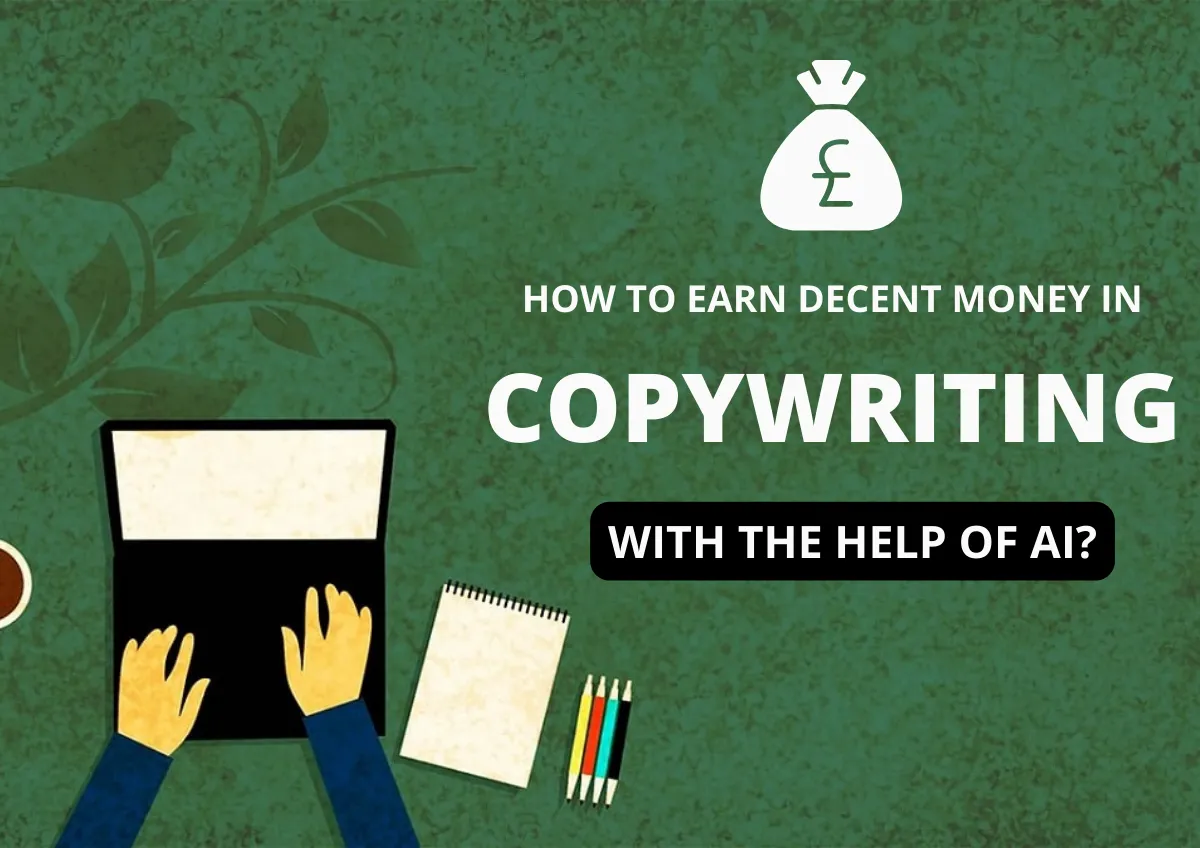
AI can help copywriters work faster, but it does not automatically make copy persuasive. Strong copy still depends on understanding the audience, the offer, the brand and the action a reader should take.
Used properly, AI can support research, idea generation, first drafts, editing and content repurposing. The copywriter remains responsible for accuracy, originality, tone and the final message.
Can You Make Money With AI-Assisted Copywriting?
Yes, AI can support a copywriting business, but the income comes from the value of the service you provide rather than from simply generating text with a tool. Clients may pay for landing pages, website copy, email campaigns, product descriptions, advertisements, social posts and other marketing content.
Your advantage is the combination of AI-assisted efficiency and human skills such as research, positioning, editing, creativity, customer understanding and communication.
How AI Can Help a Copywriter
| Copywriting task | How AI can help | What you should do |
|---|---|---|
| Research | Organise notes and suggest questions | Verify important facts and sources |
| Ideas | Generate angles, hooks and outlines | Select and improve the strongest ideas |
| First draft | Create a starting point | Rewrite it in the right voice |
| Editing | Suggest clearer wording | Make the final judgement |
| Repurposing | Turn long content into shorter formats | Adapt each version for its audience |
| Quality checks | Flag repetition or unclear sections | Review the complete copy yourself |
1. Offer Copywriting Services Businesses Already Need
Instead of selling “AI-written content”, sell a clear business outcome. You could specialise in one service or build a wider copywriting offer.
- Website and landing-page copy
- Email sequences and newsletters
- Product and service descriptions
- Social media copy
- Advertising copy
- Blog and content marketing copy
- Sales pages and lead-generation content
- Content editing and rewriting
A focused service can make it easier to explain what you do and show relevant samples to potential clients.
2. Use AI for Research and Content Planning
Before writing, use AI to help organise a brief. Ask it to identify questions your audience may have, suggest content angles or turn your research notes into a logical outline.
Do not treat an AI response as a source of truth. Check facts, statistics, quotations, product details and claims against reliable sources before they reach a client’s copy.
3. Build Better Prompts
Generic prompts often produce generic copy. Give the tool useful context about the audience, offer, objective, tone, format and restrictions.
- Audience: Who will read the copy?
- Goal: What should the reader do?
- Offer: What product or service is being promoted?
- Tone: What should the copy sound like?
- Format: Is it an email, landing page, advert or social post?
- Evidence: Which facts or source material should be used?
- Limits: What claims, words or style should be avoided?
4. Keep the Human Voice in the Final Copy
AI-generated writing can sound polished while still feeling generic. Add real customer language, specific examples, useful details and a tone that fits the brand.
Read the copy aloud. Remove repetition, vague claims and unnecessary filler. Make sure every sentence has a purpose and that the final version sounds like a person who understands the customer.
5. Create a Simple AI-Assisted Workflow
| Stage | What you do |
|---|---|
| Brief | Understand the client, audience, offer and objective |
| Research | Collect reliable information and customer insights |
| Ideation | Use AI to generate possible angles and structures |
| Draft | Use AI for a starting draft where appropriate |
| Rewrite | Add your own judgement, examples and brand voice |
| Fact-check | Verify claims and remove unsupported statements |
| Final edit | Check clarity, persuasion, grammar and calls to action |
| Client review | Collect feedback and make the agreed revisions |
6. Build a Portfolio Without Waiting for a Big Client
You need evidence of your writing before many clients will trust you with paid work. If you are starting out, create sample projects for imaginary or clearly labelled practice businesses.
- Write a sample landing page.
- Create a short email sequence.
- Rewrite a weak product description as a practice example.
- Produce several advertising concepts for a fictional business.
- Create before-and-after editing samples.
Keep your portfolio focused on the type of copywriting service you want to sell.
7. Find Clients Through Multiple Channels
Potential clients can come from freelance marketplaces, professional networking, referrals, direct outreach, agencies and your own website. Choose a few channels and use them consistently rather than trying everything at once.
When contacting a business, show that you understand its audience or marketing problem. A short, relevant message is usually more useful than a generic pitch about being an “AI copywriter”.
8. Price the Service, Not the Number of Words
Copywriting can be priced in different ways, including per project, per page, hourly or through a wider retainer arrangement. The right approach depends on the work, scope, experience and client.
AI may reduce the time needed for some tasks, but that does not mean the service should be priced simply by counting generated words. Research, strategy, editing, revisions and responsibility for the final copy all create value.
9. Protect Client Information
Do not paste confidential client information, private customer data, passwords, unpublished business plans or sensitive documents into an AI tool unless you have checked that the tool and your client agreement allow it.
Use anonymised examples when possible, follow the client’s data-handling requirements and understand the privacy settings of the AI service you use.
10. Mistakes to Avoid
- Publishing AI output without editing it.
- Using unsupported statistics or claims.
- Promising clients unrealistic results.
- Copying competitors’ content and asking AI to disguise it.
- Using the same generic prompt for every client.
- Ignoring the client’s brand voice.
- Sharing confidential information without checking privacy requirements.
- Focusing on AI tools instead of developing copywriting skills.
Useful AI Copywriting Prompts
- “Turn this client brief into a clear copywriting outline. Identify missing information I should confirm before drafting.”
- “Give me five different angles for this offer. Explain the audience problem behind each angle.”
- “Review this landing-page draft for clarity, repetition and weak claims. Suggest improvements without changing the intended message.”
- “Rewrite this paragraph in a professional but conversational UK English style. Keep the facts unchanged.”
- “Suggest ways to repurpose this article into an email, LinkedIn post and short social caption while keeping the main message consistent.”
Skills That Still Matter in AI-Assisted Copywriting
| Skill | Why it matters |
|---|---|
| Audience research | Helps you understand what customers actually need |
| Persuasive writing | Turns information into a message that supports action |
| Editing | Makes drafts clearer, sharper and more natural |
| Brand understanding | Keeps content consistent with the business |
| Fact-checking | Reduces inaccurate or unsupported claims |
| Communication | Helps you understand briefs and handle client feedback |
| Marketing knowledge | Connects copy with the wider customer journey |
A Simple Starting Plan
- Choose one copywriting service to practise.
- Select a target industry or type of client.
- Create three to five strong portfolio samples.
- Build an AI-assisted workflow for research, drafting and editing.
- Check every important fact before publishing.
- Start contacting suitable businesses and professional contacts.
- Collect feedback and improve your portfolio after each project.
Frequently Asked Questions
Can beginners use AI for copywriting?
Yes. AI can help beginners practise ideas, outlines and editing, but learning copywriting fundamentals is still important. Do not depend on generated text without understanding why the copy works.
Will AI replace copywriters?
AI is changing copywriting workflows, but many projects still require audience understanding, brand judgement, original ideas, editing, fact-checking and client communication. Copywriters can use AI as one part of their toolkit while developing these human skills.
Should I tell clients that I use AI?
Check the client’s expectations, contract and any applicable policies. Be transparent when disclosure is required, and never promise that content was created entirely without AI if that is not true.
Final Thoughts
AI can make parts of copywriting faster, but it does not remove the need for good writing, research and judgement. The strongest approach is to use AI for useful supporting tasks while keeping strategy, fact-checking, editing and final responsibility with the copywriter.
If you build a focused service, create a useful portfolio and use AI carefully, you can develop a practical copywriting workflow without treating AI as a shortcut to guaranteed income.










How to Start a Career in Sports and Leisure in the UK
A practical guide to sports and leisure careers in the UK, covering jobs, qualifications, apprenticeships, skills, experience, CVs and career...


How to Start a Career in Travel and Tourism in the UK
Travel and tourism is a broad career sector with opportunities in travel agencies, airports, airlines, visitor attractions, tours, hotels, heritage...


How to Start a Career in Property and Real Estate in the UK
Property and real estate is a broad career field covering residential property, commercial buildings, land, development, valuation, lettings, property management...


How to Start a Career in Hospitality in the UK
Thinking about hospitality as a career in the UK? Compare hotel, restaurant and guest service roles, entry routes, skills, apprenticeships...


How to Start a Career in Retail in the UK
Thinking about a retail career in the UK? Compare retail roles, entry routes, apprenticeships, skills, experience, CV tips and ways...


How to Start a Career in Science and Research in the UK
Planning a science or research career in the UK? Compare career paths, qualifications, apprenticeships, skills and practical ways to get...


How to Start a Career in Law in the UK
Thinking about a career in law? This guide explains UK legal career routes, qualifications, solicitor and barrister pathways, apprenticeships, skills,...


How to Start a Career in Education in the UK
Thinking about a career in education? Compare teaching and non-teaching roles, qualifications, apprenticeships, experience, skills and practical steps for getting...


How to Start a Career in Marketing in the UK
Marketing is a broad career field that combines communication, creativity, research, data and business thinking. It includes traditional marketing as...


How to Start a Career in Healthcare in the UK
Healthcare is one of the UK’s broadest career areas. It includes doctors and nurses, but also healthcare assistants, laboratory staff,...


How to Start a Career in Human Resources (HR) in the UK
Photo by Vitaly Gariev on Unsplash Human resources, usually called HR, is a people-focused career that combines communication, organisation, business...


How to Start a Career in Construction in the UK
Construction is one of the UK’s broadest career sectors. It includes hands-on trades such as bricklaying, carpentry and plumbing, as...


How to Start a Career in Energy and Utilities in the UK
Planning a career in energy and utilities in the UK? See job options, apprenticeships, qualifications, skills and practical steps to...


How to Start a Career in Media and Communications in the UK
Planning a media and communications career in the UK? Compare job options, entry routes, apprenticeships, skills, experience and practical steps...


How to Start a Career in Environmental and Sustainability Jobs in the UK
Environmental and sustainability careers are becoming an important part of many UK workplaces. Jobs in this area can involve protecting...


How to Start a Career in Cybersecurity in the UK
Thinking about a cybersecurity career in the UK? Here is a practical guide to skills, qualifications, entry-level roles, applications and...


How to Start a Career in Engineering in the UK
Thinking about engineering as a career in the UK? Here is a practical guide to engineering fields, qualifications, apprenticeships, skills,...


How to Start a Career in Government and Public Services in the UK
Thinking about a career in government or public services? This guide covers job options, entry routes, apprenticeships, skills, applications and...


Rolls-Royce Internship UK: Eligibility, Opportunities & How to Apply
Find Rolls-Royce internships in the UK with practical guidance on eligibility, opportunities, applications, assessments, skills and preparation.


How to Start a Career in Transport and Logistics in the UK
Planning a career in transport and logistics in the UK? See entry-level roles, apprenticeships, qualifications, skills and practical steps to...
-
 Career3 years ago
Flexible Jobs for Older Adults in the UK: 7 Career Options
-
 How-to8 months ago
How to Use Google Gemini for Freelance Work and Career Skills
-
 Jobs8 months ago
Second Jobs in the UK: 15 Practical Ways to Earn Extra Income
-
 Career2 years ago
Free Job Posting Sites in the UK: Options for Employers
-
 How-to8 months ago
How to Build Passive Income: 20 Income-Producing Assets for Long-Term Financial Growth
-

 AI & Tools8 months ago
How to Use Google Gemini for Productivity at Work
-

 Job Description3 years ago
Support Worker Job Description: Duties, Skills, Salary and Career Guide UK
-

 AI & Tools8 months ago
ChatGPT vs Microsoft Copilot: Which AI Is Best for You?