
Career
What Is a Graduate Scheme? How It Works and How to Apply
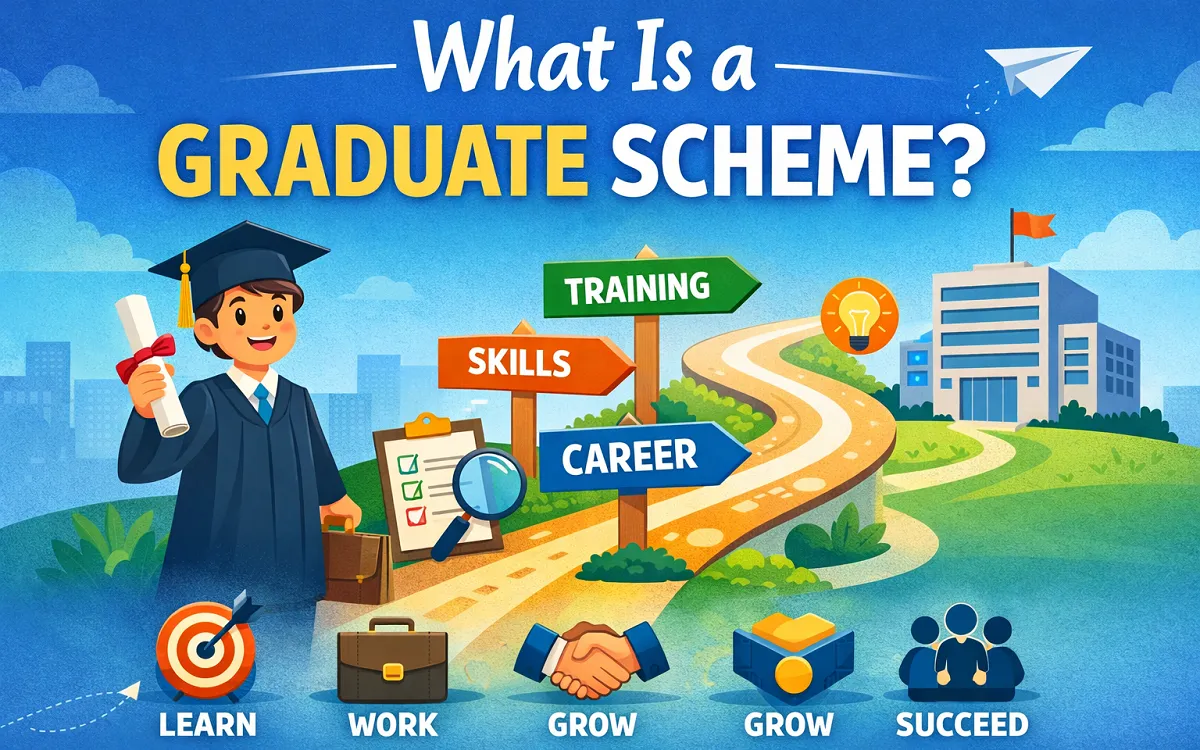
A graduate scheme is a structured early-career programme designed to help graduates develop professional skills while working for an employer. These programmes can offer formal training, mentoring, practical responsibilities and, in some cases, experience across different teams or business areas.
Graduate schemes can be highly competitive, and they are not the only route into a career. Understanding how they work can help you decide whether a scheme, a direct-entry graduate job, an apprenticeship or another entry-level role is the right option for you.
What Is a Graduate Scheme?
A graduate scheme is usually an organised development programme for people who have completed a degree or are close to graduating. Unlike a standard entry-level job, the programme often includes planned training and development alongside day-to-day work.
The exact structure depends on the employer. Some schemes focus on developing specialists, while others rotate graduates through several teams before they move into a longer-term role.
How Does a Graduate Scheme Work?
Graduate schemes vary, but they may include a combination of:
- Structured training
- Work on real projects and responsibilities
- Support from managers or mentors
- Regular performance and development reviews
- Professional qualifications in some industries
- Rotations between teams or business areas
Not every scheme includes every feature, so always read the employer’s description carefully before applying.
Graduate Scheme vs Graduate Job
| Feature | Graduate Scheme | Graduate Job |
|---|---|---|
| Development | Usually follows a planned programme | Depends on the employer and role |
| Training | Often structured | Usually focused on the requirements of the job |
| Rotations | Possible on some programmes | Less common |
| Career path | May include planned progression | Develops through the role and employer opportunities |
| Employer type | Available across different organisations | Available across organisations of all sizes |
A graduate scheme can provide a structured starting point, while a graduate job may allow you to take responsibility in one role more quickly. Neither route is automatically better.
Graduate Scheme vs Internship
An internship is generally designed to provide work experience, while a graduate scheme is usually a longer-term early-career programme for graduates. However, arrangements vary. Some internships are paid, some lead to permanent jobs and some graduate programmes have different entry requirements.
If you are still at university, our guide to UK internships explains how internships differ from graduate schemes and how to find suitable opportunities.
Always check the individual programme rather than relying only on the label.
Who Can Apply for a Graduate Scheme?
Eligibility varies by employer. A scheme may specify:
- A particular degree subject
- A minimum academic classification
- Graduation within a certain period
- The right to work in the UK
- Specific technical or professional knowledge
Other schemes accept graduates from a wide range of degree backgrounds. Do not assume that your degree title alone determines whether you are suitable.
If you are unsure which career direction fits your skills, you can also compare our guides to software development careers in the UK and data science careers in the UK.
How Long Does a Graduate Scheme Last?
The length depends on the employer and industry. Some programmes last around a year, while others continue for several years, particularly where formal training, professional qualifications or rotations are involved.
Check the programme structure, expected commitment and what happens after completion before accepting an offer.
Advantages of a Graduate Scheme
Structured development
A planned programme can make it easier to understand what skills you are expected to develop and how your responsibilities may grow.
Practical experience
You can build evidence of professional skills through real work rather than relying only on academic achievements.
Professional relationships
Working with managers, colleagues and mentors can help you build a professional network and receive useful feedback.
Clearer early-career direction
Some programmes allow graduates to gain exposure to different areas before choosing a more specialised path.
Possible Disadvantages to Consider
- Graduate schemes can be highly competitive.
- The application process may take several stages.
- Some programmes require you to follow a fixed structure.
- You may need to relocate depending on the employer.
- Progression after the programme is not identical at every organisation.
A graduate scheme should be evaluated in the same way as any other job opportunity: look at the work, training, location, culture and long-term opportunities.
When Should You Apply for Graduate Schemes?
Application periods vary considerably. Some employers recruit well before a programme starts, while others advertise opportunities closer to the start date.
The safest approach is to research your target employers early, create job alerts and check official career pages regularly. The National Careers Service says many graduate schemes are advertised between September and November, although some employers recruit throughout the year. Do not wait for a single “graduate scheme season”, because recruitment schedules differ between industries and organisations.
Where to Find Graduate Schemes in the UK
Useful places to search include:
- Employer careers pages
- University careers services
- Graduate and entry-level job boards
- Professional organisations in your industry
- Career fairs and employer events
- LinkedIn and professional networks
Our guide to popular job-hunting sites in the UK can help you build a wider search strategy. You can also look at real employer examples, such as our guides to JLR early-career opportunities and Deloitte internships.
How to Apply for a Graduate Scheme
1. Research the employer and programme
Understand the work you may be doing, the training provided and the qualities the employer is looking for.
2. Read the requirements carefully
Separate essential requirements from desirable ones. If you are unsure what an employer is asking for, read our guide on how to understand a job description.
3. Tailor your CV and application
Use relevant evidence from your degree, projects, placements, part-time work and volunteering. Explain what you did and what skills you developed.
For more help, see our complete guide to writing a CV for a job in the UK and our guide to writing a CV with no experience.
4. Prepare for online assessments where required
Some employers use online tests, written tasks or other assessments. Read the instructions carefully and practise the type of assessment where appropriate.
5. Prepare examples for interviews
Graduate recruiters often want evidence of skills such as communication, teamwork, problem-solving and initiative. Prepare genuine examples from your experience. If you are unsure how to present these examples, see our guide to competency-based interview questions and answers.
See our Job Interview Preparation: Complete Guide for a step-by-step process.
What Can You Use as Experience If You Have Not Had a Full-Time Job?
You may still have useful evidence from university projects, placements, volunteering, student societies, part-time work or personal projects. The key is explaining your contribution and the skills you used.
Read our guide to the importance of work experience and our article on job hunting tips for fresh graduates.
Common Mistakes to Avoid
- Applying without researching the programme
- Using the same generic application for every employer
- Focusing only on academic grades
- Ignoring transferable skills
- Waiting until the last moment to begin preparing
- Assuming a graduate scheme is the only good career route
- Applying for a programme without checking the location or requirements
What Happens After a Graduate Scheme?
The outcome depends on the employer and programme. Graduates may move into a permanent role, continue into a specialist position or apply their experience to opportunities elsewhere.
Before joining a scheme, ask how previous participants have progressed and whether there is a defined process for moving into a role after the programme.
Are Graduate Schemes Worth It?
A graduate scheme can be worth considering if you want structured training and a clear early-career development programme. However, a direct-entry graduate job, apprenticeship or other entry-level role may be a better fit depending on your goals.
If you are comparing routes because graduate hiring feels competitive, see our guide on why graduate jobs can be harder to find in the UK for wider job-market context.
Compare opportunities based on the quality of the work, training, support and career direction rather than assuming that a graduate scheme is automatically the best option.
Final Thoughts
Graduate schemes can provide a structured route from university into professional work, but they are only one of several ways to begin a career. Research each opportunity carefully, prepare strong evidence of your skills and apply for roles that match your interests and career direction.
For broader guidance, read our How to Get a Job in the UK: Complete Job Search Guide. You may also find our guide to entry-level jobs in the UK and our article on how to get an apprenticeship in the UK useful.


How to Start a Career in Sports and Leisure in the UK
A practical guide to sports and leisure careers in the UK, covering jobs, qualifications, apprenticeships, skills, experience, CVs and career...


How to Start a Career in Travel and Tourism in the UK
Travel and tourism is a broad career sector with opportunities in travel agencies, airports, airlines, visitor attractions, tours, hotels, heritage...


How to Start a Career in Property and Real Estate in the UK
Property and real estate is a broad career field covering residential property, commercial buildings, land, development, valuation, lettings, property management...


How to Start a Career in Hospitality in the UK
Thinking about hospitality as a career in the UK? Compare hotel, restaurant and guest service roles, entry routes, skills, apprenticeships...


How to Start a Career in Retail in the UK
Thinking about a retail career in the UK? Compare retail roles, entry routes, apprenticeships, skills, experience, CV tips and ways...


How to Start a Career in Science and Research in the UK
Planning a science or research career in the UK? Compare career paths, qualifications, apprenticeships, skills and practical ways to get...


How to Start a Career in Law in the UK
Thinking about a career in law? This guide explains UK legal career routes, qualifications, solicitor and barrister pathways, apprenticeships, skills,...


How to Start a Career in Education in the UK
Thinking about a career in education? Compare teaching and non-teaching roles, qualifications, apprenticeships, experience, skills and practical steps for getting...


How to Start a Career in Marketing in the UK
Marketing is a broad career field that combines communication, creativity, research, data and business thinking. It includes traditional marketing as...


How to Start a Career in Healthcare in the UK
Healthcare is one of the UK’s broadest career areas. It includes doctors and nurses, but also healthcare assistants, laboratory staff,...


How to Start a Career in Human Resources (HR) in the UK
Photo by Vitaly Gariev on Unsplash Human resources, usually called HR, is a people-focused career that combines communication, organisation, business...


How to Start a Career in Construction in the UK
Construction is one of the UK’s broadest career sectors. It includes hands-on trades such as bricklaying, carpentry and plumbing, as...


How to Start a Career in Energy and Utilities in the UK
Planning a career in energy and utilities in the UK? See job options, apprenticeships, qualifications, skills and practical steps to...


How to Start a Career in Media and Communications in the UK
Planning a media and communications career in the UK? Compare job options, entry routes, apprenticeships, skills, experience and practical steps...


How to Start a Career in Environmental and Sustainability Jobs in the UK
Environmental and sustainability careers are becoming an important part of many UK workplaces. Jobs in this area can involve protecting...


How to Start a Career in Cybersecurity in the UK
Thinking about a cybersecurity career in the UK? Here is a practical guide to skills, qualifications, entry-level roles, applications and...


How to Start a Career in Engineering in the UK
Thinking about engineering as a career in the UK? Here is a practical guide to engineering fields, qualifications, apprenticeships, skills,...


How to Start a Career in Government and Public Services in the UK
Thinking about a career in government or public services? This guide covers job options, entry routes, apprenticeships, skills, applications and...


Rolls-Royce Internship UK: Eligibility, Opportunities & How to Apply
Find Rolls-Royce internships in the UK with practical guidance on eligibility, opportunities, applications, assessments, skills and preparation.


How to Start a Career in Transport and Logistics in the UK
Planning a career in transport and logistics in the UK? See entry-level roles, apprenticeships, qualifications, skills and practical steps to...
-
 Career3 years ago
Flexible Jobs for Older Adults in the UK: 7 Career Options
-
 How-to8 months ago
How to Use Google Gemini for Freelance Work and Career Skills
-
 Jobs8 months ago
Second Jobs in the UK: 15 Practical Ways to Earn Extra Income
-

 Career2 years ago
Free Job Posting Sites in the UK: Options for Employers
-
 How-to8 months ago
How to Build Passive Income: 20 Income-Producing Assets for Long-Term Financial Growth
-

 AI & Tools8 months ago
How to Use Google Gemini for Productivity at Work
-

 Job Description3 years ago
Support Worker Job Description: Duties, Skills, Salary and Career Guide UK
-

 AI & Tools8 months ago
ChatGPT vs Microsoft Copilot: Which AI Is Best for You?