
Career
When Is the Best Time to Look for a Job in the UK? A Seasonal Guide for Job Seekers
Finding a job can feel confusing, especially if you don’t know when to look.
You may be asking yourself:
“Is there a right time to apply for jobs in the UK?”
“Do job openings really change from month to month?”
Yes, hiring activity can vary by season, but there is no single month that consistently has the most job openings across the whole UK. The pattern depends on the industry, employer and type of role.
Just like schools have admissions seasons and shops have sales seasons, job openings in the UK also follow a pattern. Some months are packed with opportunities, while others are quieter.
If you are a student, a fresher, a parent returning to work, or someone simply looking for a better job, this guide is for you. No jargon. No pressure. Just clear answers.
By the end of this article, you will know:
- Which month has the most job openings in the UK
- Why hiring increases during certain months
- Which months are best for freshers and experienced workers
- How to prepare, even if you are starting today
Let’s begin, step by step.
Why Job Openings in the UK Change by Month?
Before naming the best month, it helps to understand why job openings rise and fall.
Hiring does not happen randomly. It depends on:
- Company budgets
- Business cycles
- Holidays and financial years
- Staff resignations and promotions
In the UK, most companies follow a financial year from April to March. This alone plays a huge role in when new jobs appear.
Think of it like farming.
You don’t plant seeds in every season. You choose the right one.
The same logic applies to job openings.
When Is the Best Time to Look for a Job in the UK?
There is no single month that always has the most job openings across every industry. Hiring patterns change with the economy, location, employer budgets and the type of work you are looking for.
However, many employers follow recurring seasonal patterns. For general professional roles, the beginning of the year and the period after the summer holidays can be active times. Seasonal industries follow different cycles, so the best approach is to understand your sector and keep searching throughout the year.
Early in the Year: A Common Hiring Period
Many organisations review plans and recruitment needs after the holiday period. This can create new opportunities, although activity varies widely between employers and industries.
September and Autumn: Another Important Period
Recruitment activity often picks up after the summer holiday period as teams return to normal schedules. Autumn can also bring seasonal hiring in retail, logistics and hospitality.
Other Good Times to Look for Jobs
January and September can be useful periods to watch, but neither should be treated as a guaranteed peak. Official ONS vacancy figures are published mainly as rolling three-month estimates, while its single-month vacancy dataset is not seasonally adjusted. Broad seasonal patterns are therefore better treated as planning signals than as a rule about the single best month.
February and March: Steady Hiring
- Continued momentum from January hiring
- Companies rush to fill roles before the financial year ends
- Good time for experienced professionals
These months are ideal if you missed January but are still prepared.
April and May: Fresh Budgets, New Roles
- New financial year begins in April
- Departments receive new funding
- Entry-level and mid-level roles increase
Hiring is not explosive, but it is consistent and reliable.
Periods That Can Be Slower for Some Types of Hiring
Knowing when hiring slows down is just as important.
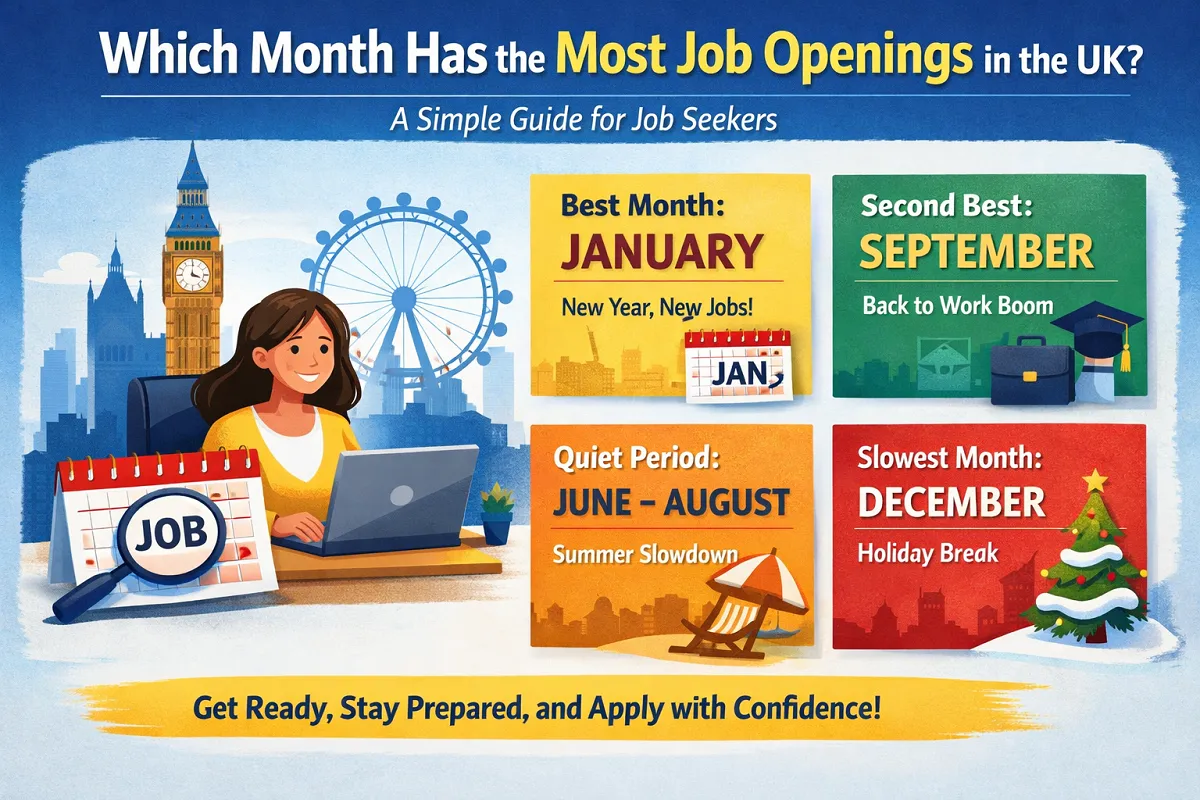
June to August: The Quiet Period
Some professional hiring processes can slow down during this period, although seasonal industries may become more active.
Why?
- Summer holidays
- Decision-makers are on leave
- Hiring processes slow down
This does not mean there are no jobs. It just means:
- Fewer listings
- Longer response times
If you apply during this time, patience is key.
December: The Slowest Month
December can be quieter for some professional recruitment processes, while seasonal retail, hospitality and logistics hiring may remain active.
Reasons include:
- Christmas holidays
- Budget exhaustion
- Focus on year-end closure
However, December is excellent for preparation, which we’ll discuss later.
Month-by-Month Job Openings Overview (Quick Summary)
Here is a general guide. Treat these patterns as useful signals rather than guarantees:
- January – Often active for professional recruitment after the holiday period
- February–March – Strong and steady
- April–May – Good growth opportunities
- June–August – Slower, but not dead
- September – Often a useful period as organisations return from summer holidays
- October–November – Moderate hiring
- December – Can be slower for some professional roles but active for seasonal work
Save this. It’s your job-search calendar.
When Should Students and Entry-Level Job Seekers Start Looking?
If you are new to the job market, timing matters even more.
Useful Times to Watch for Opportunities
- January
- September
- April
Why?
- Graduate schemes and entry-level programmes may open at different times of the year, sometimes well before their start dates
- Some employers run planned recruitment cycles for entry-level roles
- Recruitment calendars can create opportunities for people entering the workforce
Universities and colleges also align their schedules with these hiring cycles. If you are entering the market for the first time, our guide to entry-level jobs in the UK can help you broaden your options.
Best Months for Experienced Professionals
If you already have work experience, your window is wider.
Ideal Months:
- January
- February
- March
- September
- October
Senior roles often open when:
- Teams restructure
- Managers move on
- New projects begin
Does Industry Matter? Yes, It Does
Not all industries hire at the same time.
Retail & Hospitality
- Seasonal hiring can increase from October to December
- Seasonal and temporary roles
IT & Tech
- Recruitment can be active in January to March and around September, depending on the employer
- Project-based recruitment
Healthcare & Education
- Hiring all year
- Hiring continues throughout the year, with recruitment cycles varying by employer and role
Construction & Engineering
- Hiring can vary with project schedules, weather and employer demand
Your industry can have a much bigger effect on timing than any general monthly pattern.
What If You Miss the Best Month?
Here’s the truth many won’t tell you:
A good candidate can get hired in any month.
Timing helps.
Preparation helps more.
If you missed January or September, don’t panic. Use slower months to:
- Improve your CV
- Learn new skills
- Build connections
- Apply consistently
Remember, companies hire when they need someone, not just when calendars say so.
How to Prepare Before the Best Hiring Months
Think of job searching like an exam. You don’t start studying on exam day.
What to Do in December or Summer Months
- Update your CV and LinkedIn profile
- Create job alerts on UK job portals
- Research companies you admire
- Practice interview answers
This way, when January or September arrives, you are ready, not rushed. If your CV needs work, use our complete UK CV guide before you start applying.
Simple Job Search Tips That Actually Work
Let’s keep this practical.
Do These Things:
- Apply early in the month
- Customise your CV slightly for each role
- Follow up politely
- Stay consistent, not desperate
Small habits, big results. You can also widen your search by using our guide to UK job-hunting websites alongside employer career pages.
Final Thoughts
The best time to look for a job depends on your industry, experience level and the type of role you want. Some periods can be more active for professional recruitment, while seasonal sectors follow their own calendars.
The most important strategy is to prepare early, set job alerts, tailor your applications and continue searching throughout the year. Do not wait for one “perfect” month before starting your job search.
A well-prepared candidate can find opportunities at any time of year.
What to Read Next
- How to Get a Job in the UK: Complete Job Search Guide
- How to Get a Job When There Are Fewer Vacancies
- Why Is It So Hard to Get a Job in the UK?
- How to Write a CV for a Job in the UK: Complete Guide
- How UK Job Seekers Can Use LinkedIn to Find More Job Opportunities
January and September can be useful periods to watch, but there is no guaranteed “best month” for every job seeker. Your industry, role, location and the employer’s hiring cycle matter more than the calendar alone.
But remember this:
Jobs don’t go only to the luckiest people.
They go to the prepared ones.
If you are reading this today, you are already one step ahead.
Mark your calendar. Prepare your documents. Build confidence.
Whether it’s January, September, or even a quiet month—your opportunity can still be waiting.
Start today.
Your future job is closer than you think.




How to Start a Career in Sports and Leisure in the UK
A practical guide to sports and leisure careers in the UK, covering jobs, qualifications, apprenticeships, skills, experience, CVs and career...


How to Start a Career in Travel and Tourism in the UK
Travel and tourism is a broad career sector with opportunities in travel agencies, airports, airlines, visitor attractions, tours, hotels, heritage...


How to Start a Career in Property and Real Estate in the UK
Property and real estate is a broad career field covering residential property, commercial buildings, land, development, valuation, lettings, property management...


How to Start a Career in Hospitality in the UK
Thinking about hospitality as a career in the UK? Compare hotel, restaurant and guest service roles, entry routes, skills, apprenticeships...


How to Start a Career in Retail in the UK
Thinking about a retail career in the UK? Compare retail roles, entry routes, apprenticeships, skills, experience, CV tips and ways...


How to Start a Career in Science and Research in the UK
Planning a science or research career in the UK? Compare career paths, qualifications, apprenticeships, skills and practical ways to get...


How to Start a Career in Law in the UK
Thinking about a career in law? This guide explains UK legal career routes, qualifications, solicitor and barrister pathways, apprenticeships, skills,...


How to Start a Career in Education in the UK
Thinking about a career in education? Compare teaching and non-teaching roles, qualifications, apprenticeships, experience, skills and practical steps for getting...


How to Start a Career in Marketing in the UK
Marketing is a broad career field that combines communication, creativity, research, data and business thinking. It includes traditional marketing as...


How to Start a Career in Healthcare in the UK
Healthcare is one of the UK’s broadest career areas. It includes doctors and nurses, but also healthcare assistants, laboratory staff,...


How to Start a Career in Human Resources (HR) in the UK
Photo by Vitaly Gariev on Unsplash Human resources, usually called HR, is a people-focused career that combines communication, organisation, business...


How to Start a Career in Construction in the UK
Construction is one of the UK’s broadest career sectors. It includes hands-on trades such as bricklaying, carpentry and plumbing, as...


How to Start a Career in Energy and Utilities in the UK
Planning a career in energy and utilities in the UK? See job options, apprenticeships, qualifications, skills and practical steps to...


How to Start a Career in Media and Communications in the UK
Planning a media and communications career in the UK? Compare job options, entry routes, apprenticeships, skills, experience and practical steps...


How to Start a Career in Environmental and Sustainability Jobs in the UK
Environmental and sustainability careers are becoming an important part of many UK workplaces. Jobs in this area can involve protecting...


How to Start a Career in Cybersecurity in the UK
Thinking about a cybersecurity career in the UK? Here is a practical guide to skills, qualifications, entry-level roles, applications and...


How to Start a Career in Engineering in the UK
Thinking about engineering as a career in the UK? Here is a practical guide to engineering fields, qualifications, apprenticeships, skills,...


How to Start a Career in Government and Public Services in the UK
Thinking about a career in government or public services? This guide covers job options, entry routes, apprenticeships, skills, applications and...


Rolls-Royce Internship UK: Eligibility, Opportunities & How to Apply
Find Rolls-Royce internships in the UK with practical guidance on eligibility, opportunities, applications, assessments, skills and preparation.


How to Start a Career in Transport and Logistics in the UK
Planning a career in transport and logistics in the UK? See entry-level roles, apprenticeships, qualifications, skills and practical steps to...
-
 Career3 years ago
Flexible Jobs for Older Adults in the UK: 7 Career Options
-
 How-to8 months ago
How to Use Google Gemini for Freelance Work and Career Skills
-
 Jobs8 months ago
Second Jobs in the UK: 15 Practical Ways to Earn Extra Income
-

 Career2 years ago
Free Job Posting Sites in the UK: Options for Employers
-
 How-to8 months ago
How to Build Passive Income: 20 Income-Producing Assets for Long-Term Financial Growth
-

 AI & Tools8 months ago
How to Use Google Gemini for Productivity at Work
-

 Job Description3 years ago
Support Worker Job Description: Duties, Skills, Salary and Career Guide UK
-

 AI & Tools8 months ago
ChatGPT vs Microsoft Copilot: Which AI Is Best for You?