
How-to
How to Work Effectively from Home [10 Practical Tips]


Remote work has become a norm in today’s professional world, whether you work from home occasionally or full-time, having a solid strategy can enhance productivity and maintain work-life balance. This guide covers practical tips and strategies to help you work efficiently from the comfort of your home.
1. Create a Dedicated Workspace:
A dedicated workspace is essential for fostering focus and professionalism. While not everyone has the luxury of a separate office, setting aside a specific area for work—away from distractions—is crucial.
- Choose Your Spot Wisely: Avoid working from your bed or couch. Instead, opt for a table or desk where you can sit upright and organise your tools.
- Keep It Professional: Use this space exclusively for work to reinforce a psychological boundary between personal and professional life.
If you’re employed, ensure your employer provides the necessary tools, such as laptops, remote access credentials, and IT support. For self-employed individuals, investing in quality equipment is vital for smooth operations.
2. Adopt a Professional Dress Code:
Your attire significantly influences your mindset. Dressing appropriately—even at home—can boost confidence and productivity.
- Dress for Success: Wear clothes suitable for a professional setting, especially when participating in video calls.
- Stay Comfortable Yet Professional: Strike a balance between comfort and work-appropriate attire.
3. Ensure Reliable Internet Connectivity:
A stable internet connection is non-negotiable for remote job. Slow speeds can derail productivity and create unnecessary frustration.
- Upgrade Your Speed: Choose an internet plan that supports your work needs, especially if multiple devices share the bandwidth.
- Use Ethernet or Position Wisely: Ethernet connections provide a stable alternative to Wi-Fi. If you’re relying on Wi-Fi, position yourself close to the router to optimise signal strength.
4. Communicate Boundaries with Housemates:
Setting clear boundaries with family or housemates prevents interruptions.
- Set Expectations: Inform them of your work hours and emphasise the importance of an undisturbed workspace.
- Use Visual Signals: Consider placing a “Do Not Disturb” sign or closing the door to signal when you’re in work mode.
5. Minimize Distractions:
Home environments often present distractions that can impede focus.
- Identify Your Distractions: Pinpoint common distractions, such as your phone, television, or pets.
- Create a Distraction-Free Zone: Keep unnecessary devices out of reach and choose a workspace with minimal disruptions.
6. Set Clear Daily Goals:
Having a structured plan ensures that you stay on track throughout the day.
- Start with a To-Do List: Write down your goals, deliverables, and a plan of action at the beginning of your workday.
- Review Progress Regularly: Check in with yourself or your team to ensure alignment and address challenges promptly.
7. Incorporate Social Interactions:
Working from home can sometimes feel isolating, so staying connected with others is important.
- Schedule Interactions: Plan video calls, lunch dates, or virtual hangouts to maintain a sense of connection.
- Join Online Communities: Engage in professional or hobby-related groups to broaden your social circle.
8. Master Time Management:
Efficiently managing your time ensures that you remain productive amidst distractions.
- Use Time Blocks: Allocate specific time slots for tasks, allowing breaks in between.
- Leverage Productivity Tools: Tools like calendars and task management apps can help you stay organised.
9. Take Regular Breaks:
Continuous work without breaks can lead to burnout. Incorporating pauses helps recharge your mind and body.
- Practice Movement: Use breaks to stretch, meditate, or engage in light exercise like yoga.
- Follow the Pomodoro Technique: Work in focused intervals (e.g., 25 minutes), followed by short breaks.
10. End Your Day with Reflection:
Conclude your workday by reviewing accomplishments and unwinding.
- Reflect on Progress: Spend 10–15 minutes assessing your achievements and setting goals for the next day.
- Decompress Mindfully: Transition from work to personal time with relaxation techniques or hobbies.
Final Words:
Working from home offers flexibility but requires discipline and intentionality to remain productive. By implementing these strategies, you can optimise your remote work experience and achieve professional success without compromising your well-being. Start making these changes today and transform your home into an efficient workspace.

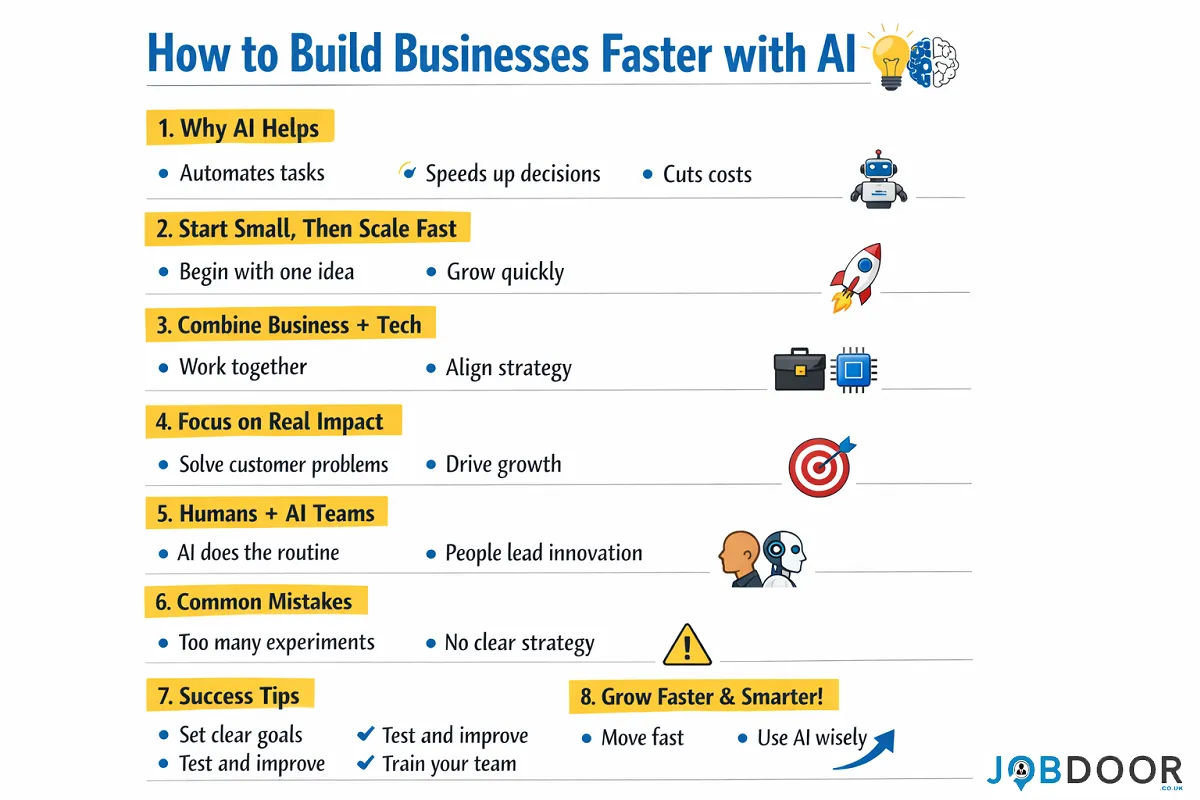
1. What is the main idea?
The article explains that AI (Artificial Intelligence) can help companies build new businesses much faster, cheaper, and smarter than before.
Earlier, starting a new business took a lot of time, money, and effort.
Now, AI is changing that.
2. Why AI makes business building faster?
AI helps in many ways:
- It automates routine work (like research, customer support, data analysis)
- It helps teams make better decisions quickly
- It reduces the need for large teams and long processes
Because of this, companies can:
- Launch products faster
- Test ideas quickly
- Fix problems early
3. What successful companies do differently?
The article says top companies don’t just “use AI tools.”
They change how they build businesses completely.
They focus on:
a) Start small, then grow fast
- Don’t try to change everything at once
- Pick one idea or area
- Build it quickly using AI
- Then expand
This approach works better than big, slow projects.
b) Combine business + technology thinking
- Business teams and tech teams must work together
- Leaders should understand both business problems and AI possibilities
c) Focus on real value (not just experiments)
Many companies fail because they:
- Try random AI experiments
- Don’t focus on actual business impact
Successful companies:
- Use AI to solve real customer problems
- Focus on revenue, growth, and efficiency
4. AI changes how companies are built:
Earlier:
- People did most work
- Processes were slow and manual
Now:
- Humans + AI work together
- AI handles repetitive tasks
- Humans focus on creativity and decisions
This creates a new type of organization, where AI becomes part of everyday work.
5. Key benefits of using AI in business building
AI helps companies:
- Build businesses faster
- Spend less money
- Scale operations easily
- Improve customer experience
- Make smarter decisions
Some AI-driven businesses even grow much faster than traditional ones.
6. Common mistakes companies make:
The article warns about a few problems:
- Using AI without a clear plan
- Running too many small experiments without results
- Not training leaders and teams properly
- Treating AI as a tool instead of a strategy
👉 Just using AI tools is not enough —
you must change how the business works.
7. What companies should do:
To succeed with AI:
- Start with a clear goal
- Use AI in important areas first
- Build small, test fast, improve quickly
- Train leaders and teams in AI
- Focus on real business results
8. Final takeaway:
AI is not just a technology upgrade.
It is a new way of building businesses.
Companies that:
- Move fast
- Learn quickly
- Use AI wisely

Have you ever wondered how some YouTube channels grow incredibly fast without ever showing a face on camera? You see dramatic storytelling videos, cinematic clips, and mysterious narratives that attract millions of views. It might feel confusing at first.
“How are they making these videos?”
“Do they need expensive equipment?”
“Do they need acting skills or video production experience?”
The truth is—you don’t need any of those things anymore.
With powerful AI video generation tools like SORA 2, anyone can create high-quality cinematic videos without filming anything in the real world. That means no camera, no actors, and no studio.
This guide will walk you through everything from mindset to strategy to execution so you can confidently start creating viral faceless YouTube videos.
By the end of this article, you will learn:
- What SORA 2 actually does
- Why faceless YouTube channels are exploding
- How to pick profitable video ideas
- A step-by-step workflow to create videos
- How to track performance and grow your channel
Even if you’re a complete beginner, this guide will help you build a clear system that removes confusion and anxiety.
Let’s start.
Why Faceless YouTube Channels Are Growing So Fast?
Before we talk about SORA 2, let’s understand something important.
Faceless channels are not a trend.
They are a content model.
A faceless YouTube channel simply means:
The creator never appears on camera.
Instead, the video uses:
- AI visuals
- Storytelling scenes
- Narration
- Text overlays
- cinematic clips
This format has several advantages.
1. Anyone Can Do It
You don’t need to be confident on camera.
You don’t need to worry about lighting, makeup, or filming locations.
All you need is ideas and creativity.
2. Videos Are Faster to Produce
Traditional video production involves:
- filming
- retakes
- editing
- lighting adjustments
With AI-generated scenes, you can create visuals in minutes instead of hours.
3. Infinite Story Possibilities
AI allows you to generate scenes that are impossible to film easily.
For example:
- mysterious forests
- cinematic crime scenes
- dramatic survival stories
- historical recreations
That’s why AI faceless channels often feel more cinematic than regular videos.
What Is SORA 2 and Why It’s Powerful?
SORA 2 is an advanced AI video generation technology that creates cinematic scenes from text descriptions.
You simply describe a scene, and the AI generates video footage.
For example:
“A lone traveler walking through a foggy forest at night holding a lantern.”
The AI can generate that scene visually.
This changes the entire game for content creators.
Instead of filming in real locations, you can generate entire video stories with AI visuals.
Key Advantages of SORA 2:
- Cinematic video generation
- realistic lighting and motion
- storytelling scenes
- no filming required
- unlimited creative environments
This means your videos can look like movie scenes, even if you’re just starting.
Step 1: The Mindset for Success (Most People Skip This)
Before we talk about tools and workflows, we need to address mindset.
Many beginners fail because they think:
- “I need to be perfect.”
- “I need professional editing.”
- “I need expensive software.”
You don’t.
You only need consistency and storytelling.
Think about YouTube like planting seeds.
You upload videos.
Some grow slowly.
Some suddenly explode.
Your job is simply to plant enough seeds.
So remember:
Your first videos are practice.
The goal is progress, not perfection.
Step 2: Choose the Right Faceless Video Niche
Your niche determines your success.
Some niches perform extremely well with AI storytelling.
Here are powerful niches that work perfectly with AI-generated scenes.
1. Mystery and Crime Stories:
People love suspense.
Examples include:
- unsolved mysteries
- crime storytelling
- dark urban legends
AI can generate dramatic visuals like:
- dark alleys
- police scenes
- mysterious figures
These videos often go viral because viewers stay curious until the end.
2. Survival and Adventure Stories:
Adventure content works extremely well with cinematic AI scenes.
Examples:
- survival in the wilderness
- solo camping stories
- extreme adventure storytelling
Scenes like:
- foggy forests
- campfires
- dangerous wildlife encounters
create immersive storytelling.
3. Historical Stories:
History channels are exploding on YouTube.
Examples:
- ancient civilizations
- historical battles
- famous historical mysteries
AI-generated scenes can recreate environments like:
- ancient cities
- battlefields
- royal palaces
which would normally require huge production budgets.
4. Sci-Fi and Futuristic Stories:
Science fiction is perfect for AI-generated visuals.
Examples:
- AI futures
- space exploration stories
- futuristic cities
AI can generate visuals that look like movie scenes.
Step 3: Creating Video Ideas That Attract Clicks
Before creating visuals, you must design the idea.
Great YouTube videos follow a simple formula:
Curiosity + Emotion + Story
Examples:
- “The Man Who Survived Alone in the Forest for 100 Days”
- “The Creepiest Unsolved Mystery in America”
- “What Happens If Humans Disappear Tomorrow?”
Ask yourself:
Would I click this video?
If the answer is yes, the idea works.
Step 4: Generating Cinematic Scenes with SORA 2
Once you have an idea, you can begin generating scenes.
The key is writing clear visual prompts.
Instead of writing vague prompts, describe the scene like a movie director.
Example Prompt
Bad prompt:
“Man walking in forest”
Better prompt:
“Cinematic scene of a lone hiker walking through a foggy forest at dawn carrying a lantern, dramatic lighting, cinematic atmosphere.”
The better your description, the better your video scenes.
Pro Tip
Generate multiple scenes for each story moment.
This helps create visual variety in the video.
Step 5: Structure Your Video Like a Story
A viral video is not random clips.
It’s a story journey.
Use this simple storytelling structure.
1. The Hook (First 10 Seconds):
Grab attention immediately.
Example:
“This man entered the forest alone… but something was already watching him.”
Viewers should feel curious instantly.
2. The Build-Up:
Introduce the situation.
Explain the background.
Slowly increase tension.
3. The Twist:
Every viral story has a moment where something unexpected happens.
Example:
- strange sound
- mysterious discovery
- unexpected danger
This keeps viewers watching.
4. The Resolution:
End the story with a satisfying conclusion.
This helps viewers remember your channel.
Step 6: Add Voice Narration
Narration brings life to faceless videos.
The tone should match the story.
For mystery videos:
- slow
- calm
- suspenseful
For adventure stories:
- energetic
- immersive
Short sentences help build tension.
Example:
“At first… everything seemed normal.”
“But then he heard it.”
“A sound coming from deep in the forest.”
That rhythm keeps viewers engaged.
Step 7: Designing a Viral Thumbnail
Your thumbnail is the first impression.
Even the best video fails without a good thumbnail.
Great thumbnails include:
- strong emotion
- dramatic visuals
- minimal text
Examples:
- shocked face expression
- mysterious animal
- dramatic lighting
Keep text short.
Example:
“SORA 2 Secrets”
or
“AI Videos That Go Viral”
Step 8: Writing Titles That Trigger Curiosity
Titles must make viewers curious.
Good titles create a question in the viewer’s mind.
Examples:
- “How I Use SORA 2 to Create Viral Faceless Videos”
- “The Secret Behind AI Viral Videos”
- “This AI Tool Can Make YouTube Videos for You”
Avoid boring titles like:
“AI Video Tutorial”
Instead create intrigue.
Step 9: Upload Strategy for Growth
Consistency matters more than perfection.
A good beginner schedule is:
- 2 videos per week
This gives the algorithm enough content to analyze.
Think of YouTube like training data.
The more videos you publish, the more YouTube understands your audience.
Step 10: Track Your Success (Simple Metrics)
Many beginners overcomplicate analytics.
Focus on only three metrics.
| Metric | Why It Matters |
|---|---|
| Click-Through Rate | Shows if your thumbnail works |
| Average View Duration | Shows if your story keeps attention |
| Subscriber Growth | Shows if people trust your content |
If viewers leave early, improve the hook.
If nobody clicks, improve the thumbnail.
Small adjustments lead to big growth.
Common Beginner Mistakes to Avoid:
Here are mistakes that slow down new creators.
Overcomplicating Production:
Remember:
Simple stories work.
Don’t aim for Hollywood.
Aim for consistent storytelling.
Uploading Too Slowly:
Growth comes from volume.
Uploading one video every two months will slow momentum.
Ignoring Thumbnails:
Even a great video fails without clicks.
Your thumbnail deserves serious attention.
The Future of AI Video Creation:
We are entering a new era of content creation.
AI video generation allows creators to build cinematic stories without studios, actors, or equipment.
This means the barrier to entry is disappearing.
What matters now is:
- creativity
- storytelling
- consistency
Those who start early will gain a massive advantage.
Conclusion:
Creating viral faceless YouTube videos might seem complicated at first.
But when you break it down, the process is surprisingly simple.
You only need a clear system.
Remember the key steps:
- Choose a strong niche
- Create curiosity-driven ideas
- Generate cinematic scenes with SORA 2
- Structure videos as stories
- Design clickable thumbnails
- Track simple metrics
Most importantly, don’t wait for perfection.
Your first video will teach you more than reading ten tutorials.
Your second video will be better.
Your tenth video might go viral.
The creators who succeed are not the most talented.
They are simply the ones who start and keep going.
So open your notebook.
Write your first video idea.
And begin creating today.

Saying goodbye at work is never easy. One day you’re sharing coffee breaks, deadlines, and inside jokes — and the next day, a colleague is packing their desk and moving on. You want to say something meaningful. But what?
Many people feel awkward writing a goodbye email to a colleague. Should it be formal or friendly? Short or detailed? Emotional or professional? The uncertainty can create stress, especially if you’re not naturally expressive with words.
Here’s the good news: writing a thoughtful farewell message doesn’t need to be complicated. You don’t need to be a poet. You just need sincerity, clarity, and the right structure.
This guide will walk you through everything — from understanding the purpose of a goodbye email to step-by-step writing formulas, real examples, subject lines, and mistakes to avoid. By the end, you’ll know exactly what to say when a coworker is leaving, and you’ll feel confident hitting “send” without second-guessing yourself.
Let’s begin.
Why a Goodbye Email Matters More Than You Think?
A farewell message may seem small, but it carries emotional and professional value.
1. It strengthens relationships
Workplaces change. Careers evolve. But strong connections remain. A simple goodbye email keeps doors open for future collaboration.
2. It shows appreciation
People want to feel valued. A few genuine words can validate years of teamwork.
3. It preserves professional reputation
How you communicate during transitions reflects your emotional intelligence and professionalism.
4. It provides closure
Whether the departure is happy or bittersweet, a goodbye message helps everyone move forward with positivity.
Think about it — have you ever received a heartfelt farewell message that stayed with you? That’s the impact you’re creating.
When Should You Send a Goodbye Email?
Timing matters. Sending too early feels awkward. Too late feels rushed.
Best moments to send:
- On the colleague’s last working day
- A day before departure
- After a farewell meeting or announcement
Avoid sending:
- Immediately after hearing the news (unless you’re very close)
- Long after they’ve already left
The goal is simple: be timely, not rushed.
How to Write a Goodbye Email to a Colleague?
Let’s remove the guesswork. Use this easy framework.
Step 1: Start with a warm greeting
Keep it natural.
Examples:
- Hi Sarah,
- Dear John,
- Hello Team, (for group messages)
Step 2: Acknowledge their departure
Be clear and positive.
Example:
- I was surprised to hear you’re moving on, but I’m excited about your next chapter.
Step 3: Express appreciation
This is the heart of your message.
Think about:
- What you learned from them
- Projects you worked on together
- Personal qualities you admire
Step 4: Share a personal memory (optional but powerful)
Specific memories feel genuine.
Example:
- I’ll always remember our late-night deadline crunches and how you kept everyone calm.
Step 5: Offer good wishes
Keep it optimistic.
Examples:
- Wishing you success in your new role
- I know you’ll do amazing things ahead
Step 6: End with a connection invitation
Leave the relationship open.
Example:
- Let’s stay in touch
- Hope our paths cross again
Simple Formula You Can Always Follow:
If you ever feel stuck, use this structure:
Greeting → Acknowledge → Appreciate → Personal note → Good wishes → Stay connected
That’s it. Simple. Effective. Memorable.
Examples of Goodbye Emails for Different Situations:
1. Short and Professional Goodbye Email:
Hi Alex,
It was a pleasure working with you. Your dedication and positive attitude made every project smoother. Wishing you all the best in your new journey — your next team is lucky to have you.
Let’s stay in touch.
Best regards,
[Your Name]
2. Friendly and Warm Farewell Message:
Hey Peter,
I can’t believe you’re leaving! Working with you has been one of the best parts of my time here. Your energy, creativity, and endless support made even stressful days enjoyable.
I’m excited to see what you accomplish next. Keep shining — and don’t forget us!
Stay in touch 😊
3. Goodbye Email to Manager:
Dear Rachel,
Thank you for your leadership and guidance. I’ve learned valuable lessons from your approach to teamwork and problem-solving. Your mentorship truly shaped my growth here.
Wishing you continued success and happiness in your new role.
Warm regards,
[Your Name]
4. Group Farewell Email to Team Member:
Hi Team,
As we say goodbye to Annie, I just want to acknowledge how much she contributed to our team. Her dedication, reliability, and kindness made a real difference.
Wishing her success and happiness in everything ahead.
Subject Line Ideas That Work:
Your subject line sets the tone.
Try these:
- Best wishes on your next adventure
- Farewell and good luck
- Thank you and goodbye
- Wishing you success ahead
- You’ll be missed
Keep it clear and warm — not dramatic.
Common Mistakes to Avoid:
Even good intentions can go wrong. Watch out for these.
1. Being overly emotional
A workplace farewell isn’t a movie script. Keep sincerity balanced with professionalism.
2. Writing generic messages
“Good luck” alone feels forgettable. Add at least one personal touch.
3. Making it about yourself
The focus should be on them — not your sadness.
4. Mentioning negative experiences
A farewell email is not the place for unresolved issues.
5. Writing too long
A heartfelt message doesn’t need paragraphs of detail. Keep it meaningful and concise.
How to Make Your Goodbye Email Feel Genuine?
Authenticity is what people remember.
Tips to sound natural:
- Write like you speak
- Use simple words
- Mention one real experience
- Avoid corporate clichés
Ask yourself: Would I say this to them in person?
If yes — you’re on the right track.
What If You Didn’t Know the Colleague Well?
It happens. Not every coworker becomes a close friend.
Keep it polite and appreciative.
Example:
Hi Daniel,
While we didn’t work closely, I appreciated your professionalism and positive presence in the team. Wishing you success and fulfillment in your next role.
Best wishes,
[Your Name]
Simple. Respectful. Enough.
Goodbye Email vs. Farewell Message — What’s the Difference?
| Goodbye Email | Farewell Message |
|---|---|
| More structured | Casual and brief |
| Sent via email | Can be chat, card, or text |
| Professional tone | Often friendly tone |
| Longer format | Short and quick |
Both are valuable. Choose based on your relationship.
Should You Add Humor?
Yes — but carefully.
Humor works if:
- You have a friendly relationship
- It reflects shared memories
- It remains respectful
Avoid sarcasm or jokes that could be misunderstood.
How to Stay Connected After a Coworker Leaves?
A goodbye email can be the start of a long-term professional connection.
Ways to stay connected:
- LinkedIn connection request
- Occasional check-in message
- Celebrating their milestones
- Networking collaboration
Remember: careers are long. Relationships matter.
Special Situations: What to Say
When the departure is sudden
Focus on appreciation and support.
When they’re retiring
Celebrate achievements and legacy.
When they’re changing careers
Encourage their courage and growth.
When you feel sad
It’s okay to acknowledge emotions — briefly and positively.
Quick Checklist Before Sending:
✔ Is your message clear and warm?
✔ Did you mention appreciation?
✔ Is the tone respectful?
✔ Did you keep it concise?
✔ Would you feel good receiving this message?
If yes — send it confidently.
Conclusion:
Workplace goodbyes are emotional, but they’re also opportunities — opportunities to express gratitude, strengthen relationships, and leave a lasting positive impression.
A thoughtful goodbye email to a colleague or coworker doesn’t require perfect writing skills. It simply requires sincerity, clarity, and a touch of kindness. By following the simple structure in this guide — greeting, acknowledgment, appreciation, personal note, and good wishes — you can create a message that feels genuine and memorable.
Remember, people may forget projects and deadlines, but they rarely forget how someone made them feel. Your farewell message could be the encouragement they carry into their next chapter.
So don’t overthink it. Start today. Write from the heart. Send that email.
You might be giving someone the perfect ending — and an even better beginning.

How to Build Businesses Faster with AI?
1. What is the main idea? The article explains that AI (Artificial Intelligence) can help companies build new businesses much...

Majority of Americans Believe AI Will Cause More Harm Than Good
A recent survey by Quinnipiac University shows that many people in the United States are worried about artificial intelligence (AI)....

5 AI Tools for HR Professionals: Simplify Hiring & Management
Human Resources has always been about people. But today, HR professionals are expected to manage recruitment, employee engagement, performance tracking,...


How to Make Viral AI Solo Camping ASMR Videos?
Creating AI solo camping ASMR videos has become one of the fastest-growing content niches on YouTube and short-form platforms. Videos...


7 AI Tools Every Software Engineer Should Learn Before 2026
Artificial Intelligence is no longer a futuristic concept. It is already transforming how software is built, tested, and deployed. If...


How to Use SORA 2 to Create Viral Faceless YouTube Videos?
Have you ever wondered how some YouTube channels grow incredibly fast without ever showing a face on camera? You see...


Companies Pay $10K for This AI Masterclass: Learn the Skills That Are Reshaping the Future
Companies don’t pay for tools. They pay for systems, strategy, and transformation. A high-end AI masterclass teaches employees how to...

AI for Kids: The Fun and Easy Way to Understand Artificial Intelligence
Artificial Intelligence sounds like something from a science-fiction movie. Robots. Smart computers. Machines that think like humans. For many people,...


10 AI Myths and Facts Most People Still Believe (And the Truth Behind Them)
Artificial Intelligence is everywhere right now. You hear about it in the news. You see it in social media discussions....


5 Simple Things Successful People Do Before 8 AM
Have you ever wondered why some people seem to start their day full of energy, focus, and confidence? While others...
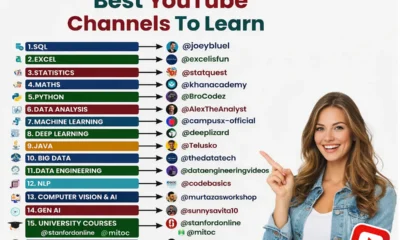

Best YouTube Channels to Learn Tech Skills for Free
Learning technology skills today is easier than ever. You don’t need expensive courses or a computer science degree anymore. YouTube...


12 Underrated Apps To Learn Something New Every Day
Let’s be honest. Most of us spend 3–5 hours a day on our phones. Scrolling social media. Watching random videos....


Google Launches Gemini 3.1 Pro: A Big Step Forward in Artificial Intelligence
Google has officially introduced Gemini 3.1 Pro, its newest and most powerful artificial intelligence model. This launch is part of...


How to Create Unlimited AI Videos in One Click for Free (2026 Guide)
Artificial Intelligence is changing how we create content online. Today, you don’t need expensive software, video editing skills, or hours...


How to Make AI Survival ASMR Videos in 2026: New Viral YouTube Niche
YouTube trends change very quickly. Every few months, a new content style appears and suddenly thousands of creators start using...


How to Run Meta Ads on a Small Budget ($100/Day Strategy That Actually Works)
Most businesses believe you need a huge advertising budget to get results from Meta Ads. That’s simply not true. In...


5 Free Facebook AI Tools to Solve 90% of Your Ad Problems
Running Facebook ads used to mean endless guesswork. You would test audiences manually, duplicate ad sets endlessly, refresh creatives every...

How to Automate Meta Ads Using Manus AI?
Meta Ads are evolving faster than ever. Manual optimization, endless A/B testing, creative fatigue, reporting stress — all of it...


How to Build Automated Online Income in 2026 – The “Sleepy” Side Hustle Blueprint
“Stop ignoring this.”“Boost your income.”“Get paid while you sleep.” You’ve seen headlines like that everywhere. Screenshots of large payouts. Smiling...


How to Sell on Amazon FBA in 2026: The Complete, Future-Proof Blueprint for Beginners & Growth Sellers
Amazon FBA (Fulfillment by Amazon) is no longer just a side-hustle trend. It’s a sophisticated eCommerce ecosystem where brand building,...
-
 Career2 years ago
Career Opportunities for Seniors: 7 Jobs that are Perfect for Older Adults
-

 Career1 year ago
5 Free Job Posting Sites in the UK (For Employers)
-
 Money2 months ago
26 Lucrative Passive Income Ideas to Build Wealth in 2026
-
 Job Description2 years ago
Graphic Designer Job Description: Education, Salary, Skills, Work Hours
-
 News1 year ago
UK Government Offers £300 to Households: How to Claim Your Payment?
-
 Jobs2 months ago
15 Best Second Jobs to Boost Your Income in the UK for 2026
-

 AI & Tools2 months ago
ChatGPT vs Copilot: Which AI Is Best for You in 2026?
-

 Career2 years ago
13 Best Jobs That AI Can’t Replace: A Guide to Future-proof Careers