
Job Description
Beauty Therapist Job Description: Duties, Skills, Salary and Career Guide UK
A Beauty Therapist provides beauty and wellbeing treatments while maintaining high standards of customer care and hygiene.
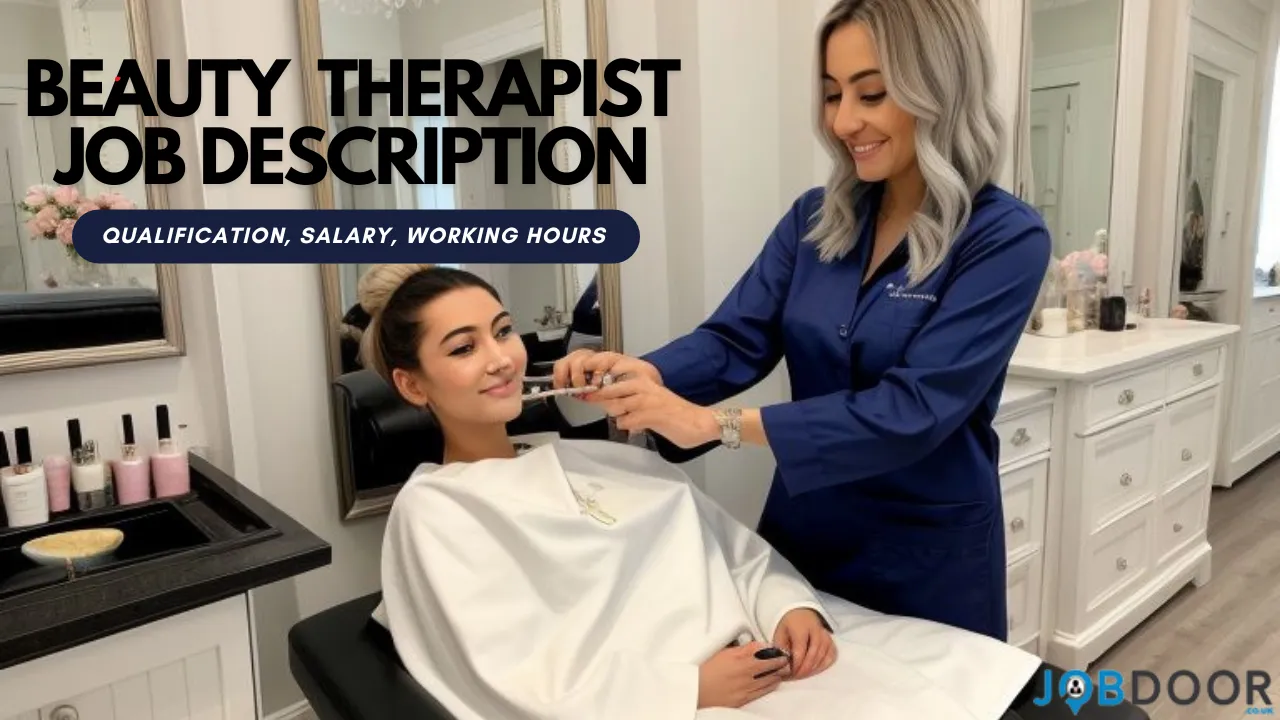
A Beauty Therapist provides beauty and wellbeing treatments while maintaining high standards of customer care and hygiene. This guide covers the duties, skills, qualifications, salary factors and practical steps involved in pursuing a Beauty Therapist career in the UK.
What Does a Beauty Therapist Do?
The exact role depends on the employer and industry. Compare the responsibilities in each advert with your own experience before applying. Our guide to what a job description is and what to look for can help.
Key Duties and Responsibilities
- Providing treatments within training and competence
- Consulting with clients and explaining aftercare
- Preparing treatment areas and maintaining hygiene
- Managing appointments and recommending suitable services
Day-to-day work
A typical day may include preparing treatment areas, consulting clients, carrying out treatments within your training, maintaining hygiene, recording client information, explaining aftercare and managing appointments. The balance of tasks depends on the salon, spa, clinic or employer.
Responsibilities vary by employer
Read several vacancies because the same title can involve different tools, levels of responsibility and working environments.
Essential Skills
- Customer service
- Technical treatment skills
- Attention to hygiene and detail
- Communication and professionalism
Depending on the vacancy, employers may also ask for knowledge of specific treatments, consultation skills, product knowledge, sales awareness and the ability to follow hygiene and safety procedures.
Technical and transferable skills
Employers want role-specific ability as well as communication, reliability, teamwork and problem solving. Use examples from work or projects to show these skills.
Qualifications and Training
Recognised beauty therapy qualifications are commonly requested, with requirements varying by treatment and employer. Level 2 or Level 3 beauty therapy training may be relevant for different roles, while specialist treatments can require additional training or certification.
Before choosing a course, compare several current vacancies to see which qualifications and treatment skills employers are requesting.
Experience and evidence
Portfolios, projects, placements and relevant responsibilities can help demonstrate ability, especially when changing careers.
Salary and Working Conditions
Pay varies by employer, location, hours, tips, commission and specialist treatments.
Pay and working patterns vary, so treat broad ranges as guides and check individual vacancies for the latest details.
How to Become a Beauty Therapist
Build the skills employers request
Review current job adverts and identify the requirements that appear repeatedly. Keep evidence of practical training and treatments you can perform within your qualification and competence. Our guide to staying employable also covers long-term career skills.
Tailor your CV
Show relevant results and responsibilities rather than using generic claims. See CV vs resume for further guidance. If you have limited experience, our CV guide for people with no experience can help you present transferable skills and training.
Prepare for interviews
Prepare examples showing your customer service, hygiene awareness, treatment skills and approach to client consultations. Use our job interview preparation guide and review common job interview mistakes.
How to Find Beauty Therapist Jobs
Search salon, spa and clinic career pages, specialist job boards and professional networks. A strong profile can improve visibility; see how UK job seekers can use LinkedIn. You can also use our guide to the best job-hunting websites in the UK. For broader advice, see our complete UK job-search guide and guide to finding work when there are fewer vacancies.
Career Prospects
Progression usually comes from stronger technical skills, greater responsibility, specialist knowledge and a record of reliable results.
Frequently Asked Questions
What skills are important for a Beauty Therapist?
Customer service, communication, attention to detail, hygiene awareness and treatment skills are important. Employers may also look for consultation, product knowledge and the ability to follow safety procedures.
Do I need formal qualifications?
Requirements vary by employer. Qualifications can help, but practical evidence and relevant experience may also be important.
Can beginners enter this field?
Junior routes may be available. Build skills and evidence before applying. If you are new to job hunting, our UK job-search guide explains the main steps from finding vacancies to preparing applications.
Final Thoughts
A Beauty Therapist career can be rewarding when the work suits your interests and strengths. Study real vacancies, build relevant evidence and tailor every application.


How to Start a Career in Sports and Leisure in the UK
A practical guide to sports and leisure careers in the UK, covering jobs, qualifications, apprenticeships, skills, experience, CVs and career...


How to Start a Career in Travel and Tourism in the UK
Travel and tourism is a broad career sector with opportunities in travel agencies, airports, airlines, visitor attractions, tours, hotels, heritage...


How to Start a Career in Property and Real Estate in the UK
Property and real estate is a broad career field covering residential property, commercial buildings, land, development, valuation, lettings, property management...


How to Start a Career in Hospitality in the UK
Thinking about hospitality as a career in the UK? Compare hotel, restaurant and guest service roles, entry routes, skills, apprenticeships...


How to Start a Career in Retail in the UK
Thinking about a retail career in the UK? Compare retail roles, entry routes, apprenticeships, skills, experience, CV tips and ways...


How to Start a Career in Science and Research in the UK
Planning a science or research career in the UK? Compare career paths, qualifications, apprenticeships, skills and practical ways to get...


How to Start a Career in Law in the UK
Thinking about a career in law? This guide explains UK legal career routes, qualifications, solicitor and barrister pathways, apprenticeships, skills,...


How to Start a Career in Education in the UK
Thinking about a career in education? Compare teaching and non-teaching roles, qualifications, apprenticeships, experience, skills and practical steps for getting...


How to Start a Career in Marketing in the UK
Marketing is a broad career field that combines communication, creativity, research, data and business thinking. It includes traditional marketing as...


How to Start a Career in Healthcare in the UK
Healthcare is one of the UK’s broadest career areas. It includes doctors and nurses, but also healthcare assistants, laboratory staff,...


How to Start a Career in Human Resources (HR) in the UK
Photo by Vitaly Gariev on Unsplash Human resources, usually called HR, is a people-focused career that combines communication, organisation, business...


How to Start a Career in Construction in the UK
Construction is one of the UK’s broadest career sectors. It includes hands-on trades such as bricklaying, carpentry and plumbing, as...


How to Start a Career in Energy and Utilities in the UK
Planning a career in energy and utilities in the UK? See job options, apprenticeships, qualifications, skills and practical steps to...


How to Start a Career in Media and Communications in the UK
Planning a media and communications career in the UK? Compare job options, entry routes, apprenticeships, skills, experience and practical steps...


How to Start a Career in Environmental and Sustainability Jobs in the UK
Environmental and sustainability careers are becoming an important part of many UK workplaces. Jobs in this area can involve protecting...


How to Start a Career in Cybersecurity in the UK
Thinking about a cybersecurity career in the UK? Here is a practical guide to skills, qualifications, entry-level roles, applications and...


How to Start a Career in Engineering in the UK
Thinking about engineering as a career in the UK? Here is a practical guide to engineering fields, qualifications, apprenticeships, skills,...


How to Start a Career in Government and Public Services in the UK
Thinking about a career in government or public services? This guide covers job options, entry routes, apprenticeships, skills, applications and...


Rolls-Royce Internship UK: Eligibility, Opportunities & How to Apply
Find Rolls-Royce internships in the UK with practical guidance on eligibility, opportunities, applications, assessments, skills and preparation.


How to Start a Career in Transport and Logistics in the UK
Planning a career in transport and logistics in the UK? See entry-level roles, apprenticeships, qualifications, skills and practical steps to...
-
 Career3 years ago
Flexible Jobs for Older Adults in the UK: 7 Career Options
-
 How-to8 months ago
How to Use Google Gemini for Freelance Work and Career Skills
-
 Jobs8 months ago
Second Jobs in the UK: 15 Practical Ways to Earn Extra Income
-

 Career2 years ago
Free Job Posting Sites in the UK: Options for Employers
-
 How-to8 months ago
How to Build Passive Income: 20 Income-Producing Assets for Long-Term Financial Growth
-

 AI & Tools8 months ago
How to Use Google Gemini for Productivity at Work
-

 Job Description3 years ago
Support Worker Job Description: Duties, Skills, Salary and Career Guide UK
-

 AI & Tools8 months ago
ChatGPT vs Microsoft Copilot: Which AI Is Best for You?