
How-to
How to Improve Your Recruitment Strategy to Hire the Best Talent?

Even in a tight market, a good recruitment strategy is a fantastic opportunity for your company’s branding, but it should always be considered and fair.
To help you try and avoid as many pitfalls as possible we’ve compiled some tips based on client experiences which we hope will help you improve your recruitment processes.

Before You Start Recruiting:
Don’t just replace like for like:
When you have a resignation, don’t just immediately try to replicate the exact role focusing on the skills and background of the person you are replacing. Look at the makeup of your team. This could be a great time to restructure.
Have you thought about hiring outside of your industry? Successful hires can include people from so many different places who are able to demonstrate the drive and inspiration to learn and ultimately become superstars. Think about how you could attract a diverse talent pool.
Review your employee pay and terms:
Review your employee bonus payments, salary levels, right to purchase holiday, remote working and especially flexible working. Do this regularly. Are you fair and competitive? Do you offer flexible, or remote job and if so could you improve on these? Updating your policies may not break the bank, but could definitely appeal and attract some of the best people to your company.
Optimize your career page and job postings:
Make sure your career page is easy to find and navigate. Job postings should be clear, concise, and highlight the most important qualifications and responsibilities. You can also use a variety of sourcing channels to reach qualified candidates, such as job boards, social media, and industry events.
Equal Opportunities:
When you write your job description and person specification, make sure you are not being discriminatory in any way.
As employers we are all responsible for ensuring that what we do now and in future builds a culture of equality and anti discrimination. If you have a diversity and discrimination policy what does that actually mean and how does this translate when you recruit?
In practical terms, when you are compiling a job description for a new hire, focus on “competency” and not “fit and even better would be to set yourself targets to attract BAME applicants.
| Also Read: Common Competency Based Interview Questions and Answers |
| Also Check: Standard Employment Contract Template Example for UK |
Using the term “fit “ to assess whether or not a candidate will suit an organisation’s culture carries connotations of race and gender bias. This means that instead of judging a candidate on their experience and qualifications, recruiters are making decisions based on stereotypical assumptions that often stem from their gender, ethnicity or nationality”.
If you want to check your own implicit bias, you can take this further, by completing a free online test such as the one created by from Harvard University. It only takes about 15 minutes but is well worth the time.
Review internal resources before you recruit externally:
Make sure that you have considered all your internal options. Ask yourself the following questions:
Have you advertised the position internally to identify any suitable applicants? How easy is it for any frustrated employees to apply for an internal move without worrying about upsetting their line manager or jeopardising their current situation?
Is there anyone internally who might have been potentially overlooked for this position and if so why?
Could any of the job responsibilities be split and shared to other existing employees?
Where are the skills gaps in your existing workforce?
Have you carried out an internal audit of pay, employment terms, promotions and BAME representations? Is your current workforce diverse across all levels (age, gender, race)?
A diverse workforce connects companies to an increasingly multicultural marketplace and studies have shown that multicultural work forces can be more successful and more profitable. Now is not the time to be complacent about diversity and inclusion.

The Interview: Dos and Don’ts:
There are so many ways to interview candidates. More and more companies are using Zoom, and Microsoft Teams for remote interviews. All methods work but the principals for interviewing are the same.
Use an applicant tracking system (ATS):
Applicant Tracking System will help you streamline the application process, track candidates, and improve communication.
Do involve several people in the interview wherever possible:
Meeting several people is a great way to showcase the diverse range of people you work with and will give the applicant a sense of your community and company values.
Don’t cancel or postpone the interview at short notice:
Never cancel or postpone the interview unless there are strong mitigating circumstances. Delaying the interview can create even more delays at a later date. A very busy hiring manager may always be difficult to pin down so wherever possible try and stick to the original agreed timetable.
Don’t be too slow in your decision making:
Manage expectations and set out clear time frames for each stage of the process. A laboriously slow process could make the applicant question whether the company is able to make decisions and changes which will get things done.
Set aside reasonable time:
Do set aside at least 45 minutes to an hour for your first interview with the applicant. It’s important to give yourself and applicants time to get to know each other. Avoid making hasty decisions and make sure any judgements are qualified, considered and fair. Don’t waste candidates’ time with lengthy interview processes. Make sure your interviews are focused and informative.
| Also Read: How AI Can Help You Land Your Dream Job? |
| Also Read: The Best Jobs That Artificial Intelligence Can’t Replace |
Develop a strong employer brand:
Job seekers will want to understand your USP as an employer, how you compare to your competitors, why they should join you. This is your company’s reputation as a workplace. Showcase your company culture, values, and what it’s like to work there. Understanding how working with you will affect their future and knowing what it is that makes you different from competitors will help an applicant decide whether you are the right choice for them.
Talk about the market, and economics, and how you deal with any challenges?
You may be asked, inevitably, about how your company dealt with all these challenges, or your thoughts on impact of Artificial Intelligence (AI) on workforce and how AI will change job roles, for example, so be prepared to discuss these topics in detail. A strong but honest message about how you deal with these challenges inspires confidence and security.
Review and Feedback:
Give constructive feedback to unsuccessful applicants too. Feedback should be thorough and timely. If you have asked someone to meet with you then you need to show respect for that time they have spent with you. Even if a candidate is not selected for the position, thank them for their time and interest. This is so important. Keep candidates informed about the status of their application throughout the process. This will improve their experience and make your company look more professional.
Tell them why you chose the person you did and highlight any skills that were missing they might decide to learn those skills and come back to you one day in the future for work, or even as a client. They might even have a friend or relative to recommend to you and they may even end up working for one of your clients. If anything, being helpful will guarantee that the last experience they have with you is a positive one.
Author Note:
Hope these tips will help you! Kindly share this article with your friends or family who are into the recruitment process.


Saying goodbye at work is never easy. One day you’re sharing coffee breaks, deadlines, and inside jokes — and the next day, a colleague is packing their desk and moving on. You want to say something meaningful. But what?
Many people feel awkward writing a goodbye email to a colleague. Should it be formal or friendly? Short or detailed? Emotional or professional? The uncertainty can create stress, especially if you’re not naturally expressive with words.
Here’s the good news: writing a thoughtful farewell message doesn’t need to be complicated. You don’t need to be a poet. You just need sincerity, clarity, and the right structure.
This guide will walk you through everything — from understanding the purpose of a goodbye email to step-by-step writing formulas, real examples, subject lines, and mistakes to avoid. By the end, you’ll know exactly what to say when a coworker is leaving, and you’ll feel confident hitting “send” without second-guessing yourself.
Let’s begin.
Why a Goodbye Email Matters More Than You Think?
A farewell message may seem small, but it carries emotional and professional value.
1. It strengthens relationships
Workplaces change. Careers evolve. But strong connections remain. A simple goodbye email keeps doors open for future collaboration.
2. It shows appreciation
People want to feel valued. A few genuine words can validate years of teamwork.
3. It preserves professional reputation
How you communicate during transitions reflects your emotional intelligence and professionalism.
4. It provides closure
Whether the departure is happy or bittersweet, a goodbye message helps everyone move forward with positivity.
Think about it — have you ever received a heartfelt farewell message that stayed with you? That’s the impact you’re creating.
When Should You Send a Goodbye Email?
Timing matters. Sending too early feels awkward. Too late feels rushed.
Best moments to send:
- On the colleague’s last working day
- A day before departure
- After a farewell meeting or announcement
Avoid sending:
- Immediately after hearing the news (unless you’re very close)
- Long after they’ve already left
The goal is simple: be timely, not rushed.
How to Write a Goodbye Email to a Colleague?
Let’s remove the guesswork. Use this easy framework.
Step 1: Start with a warm greeting
Keep it natural.
Examples:
- Hi Sarah,
- Dear John,
- Hello Team, (for group messages)
Step 2: Acknowledge their departure
Be clear and positive.
Example:
- I was surprised to hear you’re moving on, but I’m excited about your next chapter.
Step 3: Express appreciation
This is the heart of your message.
Think about:
- What you learned from them
- Projects you worked on together
- Personal qualities you admire
Step 4: Share a personal memory (optional but powerful)
Specific memories feel genuine.
Example:
- I’ll always remember our late-night deadline crunches and how you kept everyone calm.
Step 5: Offer good wishes
Keep it optimistic.
Examples:
- Wishing you success in your new role
- I know you’ll do amazing things ahead
Step 6: End with a connection invitation
Leave the relationship open.
Example:
- Let’s stay in touch
- Hope our paths cross again
Simple Formula You Can Always Follow:
If you ever feel stuck, use this structure:
Greeting → Acknowledge → Appreciate → Personal note → Good wishes → Stay connected
That’s it. Simple. Effective. Memorable.
Examples of Goodbye Emails for Different Situations:
1. Short and Professional Goodbye Email:
Hi Alex,
It was a pleasure working with you. Your dedication and positive attitude made every project smoother. Wishing you all the best in your new journey — your next team is lucky to have you.
Let’s stay in touch.
Best regards,
[Your Name]
2. Friendly and Warm Farewell Message:
Hey Peter,
I can’t believe you’re leaving! Working with you has been one of the best parts of my time here. Your energy, creativity, and endless support made even stressful days enjoyable.
I’m excited to see what you accomplish next. Keep shining — and don’t forget us!
Stay in touch 😊
3. Goodbye Email to Manager:
Dear Rachel,
Thank you for your leadership and guidance. I’ve learned valuable lessons from your approach to teamwork and problem-solving. Your mentorship truly shaped my growth here.
Wishing you continued success and happiness in your new role.
Warm regards,
[Your Name]
4. Group Farewell Email to Team Member:
Hi Team,
As we say goodbye to Annie, I just want to acknowledge how much she contributed to our team. Her dedication, reliability, and kindness made a real difference.
Wishing her success and happiness in everything ahead.
Subject Line Ideas That Work:
Your subject line sets the tone.
Try these:
- Best wishes on your next adventure
- Farewell and good luck
- Thank you and goodbye
- Wishing you success ahead
- You’ll be missed
Keep it clear and warm — not dramatic.
Common Mistakes to Avoid:
Even good intentions can go wrong. Watch out for these.
1. Being overly emotional
A workplace farewell isn’t a movie script. Keep sincerity balanced with professionalism.
2. Writing generic messages
“Good luck” alone feels forgettable. Add at least one personal touch.
3. Making it about yourself
The focus should be on them — not your sadness.
4. Mentioning negative experiences
A farewell email is not the place for unresolved issues.
5. Writing too long
A heartfelt message doesn’t need paragraphs of detail. Keep it meaningful and concise.
How to Make Your Goodbye Email Feel Genuine?
Authenticity is what people remember.
Tips to sound natural:
- Write like you speak
- Use simple words
- Mention one real experience
- Avoid corporate clichés
Ask yourself: Would I say this to them in person?
If yes — you’re on the right track.
What If You Didn’t Know the Colleague Well?
It happens. Not every coworker becomes a close friend.
Keep it polite and appreciative.
Example:
Hi Daniel,
While we didn’t work closely, I appreciated your professionalism and positive presence in the team. Wishing you success and fulfillment in your next role.
Best wishes,
[Your Name]
Simple. Respectful. Enough.
Goodbye Email vs. Farewell Message — What’s the Difference?
| Goodbye Email | Farewell Message |
|---|---|
| More structured | Casual and brief |
| Sent via email | Can be chat, card, or text |
| Professional tone | Often friendly tone |
| Longer format | Short and quick |
Both are valuable. Choose based on your relationship.
Should You Add Humor?
Yes — but carefully.
Humor works if:
- You have a friendly relationship
- It reflects shared memories
- It remains respectful
Avoid sarcasm or jokes that could be misunderstood.
How to Stay Connected After a Coworker Leaves?
A goodbye email can be the start of a long-term professional connection.
Ways to stay connected:
- LinkedIn connection request
- Occasional check-in message
- Celebrating their milestones
- Networking collaboration
Remember: careers are long. Relationships matter.
Special Situations: What to Say
When the departure is sudden
Focus on appreciation and support.
When they’re retiring
Celebrate achievements and legacy.
When they’re changing careers
Encourage their courage and growth.
When you feel sad
It’s okay to acknowledge emotions — briefly and positively.
Quick Checklist Before Sending:
✔ Is your message clear and warm?
✔ Did you mention appreciation?
✔ Is the tone respectful?
✔ Did you keep it concise?
✔ Would you feel good receiving this message?
If yes — send it confidently.
Conclusion:
Workplace goodbyes are emotional, but they’re also opportunities — opportunities to express gratitude, strengthen relationships, and leave a lasting positive impression.
A thoughtful goodbye email to a colleague or coworker doesn’t require perfect writing skills. It simply requires sincerity, clarity, and a touch of kindness. By following the simple structure in this guide — greeting, acknowledgment, appreciation, personal note, and good wishes — you can create a message that feels genuine and memorable.
Remember, people may forget projects and deadlines, but they rarely forget how someone made them feel. Your farewell message could be the encouragement they carry into their next chapter.
So don’t overthink it. Start today. Write from the heart. Send that email.
You might be giving someone the perfect ending — and an even better beginning.
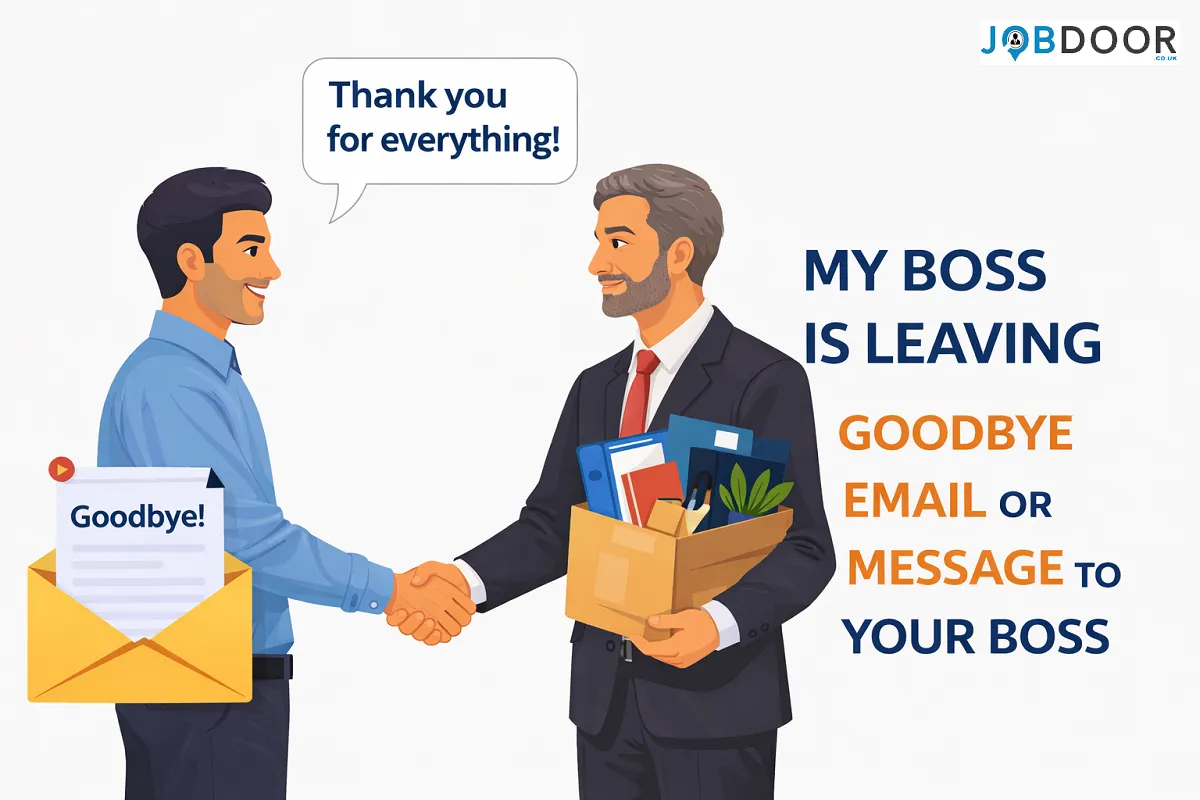
Your boss is leaving. And suddenly, you’re stuck wondering what to say.
Do you keep it formal? Do you express gratitude? Should you write a detailed goodbye email to your boss, or is a short message enough? For many people, this moment brings unexpected anxiety. You want to be respectful. Professional. Genuine. But the right words don’t always come easily.
Here’s the truth: saying goodbye to a boss isn’t just workplace etiquette — it’s a career opportunity. A thoughtful farewell message can strengthen your professional network, leave a lasting impression, and express appreciation for the guidance you’ve received.
The good news? You don’t need to overthink it. Writing a meaningful farewell message to a boss who is leaving is simple when you follow the right structure.
In this guide, you’ll learn exactly what to say, how to structure your message, examples for different situations, subject lines, mistakes to avoid, and confidence-building tips so you can write your farewell message without stress or awkwardness.
Let’s walk through this together.
Why Saying Goodbye to Your Boss Matters?
It may feel like just another email. But it’s much more than that.
1. It shows appreciation
Leadership shapes your growth. Acknowledging that impact reflects emotional intelligence and gratitude.
2. It strengthens your professional relationship
Today’s boss could become tomorrow’s mentor, reference, or collaborator.
3. It leaves a positive final impression
People remember how transitions are handled. A respectful farewell speaks volumes.
4. It gives you closure
Change can feel unsettling. A farewell message helps you process the transition positively.
Ask yourself: How often do we get the chance to thank someone who influenced our career?
When to Send a Goodbye Email to Your Boss?
Timing can influence how your message is received.
Best timing:
- On your boss’s last working day
- After a farewell meeting or announcement
- A day before departure
Avoid:
- Sending immediately after hearing the news
- Waiting weeks after they’ve left
The goal is thoughtful timing — not rushed, not delayed.
What to Say When Your Boss Is Leaving?
Feeling unsure? Use this easy structure.
Step 1: Start with a respectful greeting
Examples:
- Dear Mr. Sam
- Hi Sarah
- Dear [Boss’s Name]
Step 2: Acknowledge their departure
Example:
- I was saddened to hear you’ll be leaving, but I’m excited for your next chapter.
Step 3: Express gratitude
This is the most important part.
Think about:
- Leadership lessons you learned
- Support during challenges
- Career growth they helped you achieve
Step 4: Share a personal reflection (optional)
Specific moments make your message memorable.
Example:
- Your guidance during my first major project gave me confidence I didn’t know I had.
Step 5: Wish them success
Keep it positive and encouraging.
Step 6: Keep the connection open
Example:
- I hope to stay in touch and learn from your journey ahead.
The Easy Formula You Can Always Use:
Greeting → Acknowledge → Appreciate → Personal reflection → Good wishes → Stay connected
Simple. Effective. Professional.
Examples of Goodbye Messages to a Boss:
1. Professional Goodbye Email to Boss
Dear Mr. Kevin,
Thank you for your leadership, guidance, and constant encouragement. Your mentorship has played a major role in my professional growth, and I truly appreciate the opportunities you provided.
Wishing you continued success and happiness in your new journey. It was an honor working under your leadership.
Warm regards,
[Your Name]
2. Warm and Heartfelt Farewell Message:
Hi Ana,
It’s hard to imagine the team without you. Your support, patience, and positive leadership created an environment where everyone felt motivated and valued.
I’m grateful for everything I’ve learned from you. Wishing you success, happiness, and exciting opportunities ahead.
3. Short Goodbye Message to Boss:
Dear Sir,
Thank you for your support and guidance throughout my time here. Your leadership made a meaningful difference in my growth.
Wishing you all the best in your next role.
4. Goodbye Message When Boss Is Retiring:
Dear Madam,
Your leadership and dedication have left a lasting impact on the entire team. Thank you for the wisdom, patience, and inspiration you shared with us over the years.
Wishing you a joyful and fulfilling retirement — you truly deserve it.
Subject Line Ideas for Goodbye Email to Boss:
A clear subject line sets the tone.
Try:
- Thank you and best wishes
- Farewell and gratitude
- Wishing you success ahead
- Thank you for your leadership
- Best wishes on your new journey
Keep it simple and respectful.
Common Mistakes to Avoid:
Even thoughtful messages can go wrong. Avoid these.
1. Being overly emotional:
Professional warmth is good. Excessive emotional expression can feel uncomfortable.
2. Writing generic praise:
Avoid phrases that sound copied. Personal touches matter.
3. Making the message too long:
Your boss is likely receiving many messages. Keep it meaningful and concise.
4. Mentioning workplace complaints:
A farewell message should stay positive.
5. Forgetting gratitude:
This is the heart of the message. Don’t skip it.
How to Make Your Goodbye Message Feel Genuine?
Authenticity creates impact.
Tips
- Write as you naturally speak
- Mention one real learning or moment
- Avoid corporate clichés
- Focus on appreciation, not perfection
Ask yourself: Would this message make my boss feel appreciated?
What If You Didn’t Have a Close Relationship With Your Boss?
That’s completely normal.
You can keep your message respectful and brief.
Example:
Dear [Name],
While we didn’t work closely, I appreciate your leadership and the positive environment you created. Wishing you success and fulfillment in your future endeavors.
Best regards,
[Your Name]
Polite. Professional. Enough.
Goodbye Email vs. Personal Message — Which Should You Choose?
| Goodbye Email | Personal Message |
|---|---|
| Formal and structured | Friendly and brief |
| Suitable for professional distance | Ideal for close relationships |
| Longer format | Shorter, conversational |
Choose based on your relationship and workplace culture.
Should You Add Humor in a Farewell Message to Boss?
It depends.
Humor works when:
- You share a friendly rapport
- The workplace culture is relaxed
- The joke is respectful and inclusive
When unsure, stay sincere and simple.
How to Maintain the Relationship After Your Boss Leaves?
A farewell message doesn’t have to be the end.
Ways to stay connected
- Connect on LinkedIn
- Send occasional updates
- Congratulate them on milestones
- Seek mentorship guidance in the future
Careers are built on relationships — not just skills.
Special Situations and What to Say:
When the departure is sudden
Focus on appreciation and best wishes.
When your boss was a mentor
Highlight lessons learned and personal growth.
When you’re nervous writing the message
Keep it short and sincere. Simple words carry powerful meaning.
Quick Checklist Before Sending Your Message:
✔ Is your tone respectful and warm?
✔ Did you express gratitude?
✔ Is the message concise?
✔ Did you include good wishes?
✔ Would you feel proud sending this?
If yes — send it confidently.
Conclusion:
When your boss is leaving, finding the right words can feel intimidating. You may worry about sounding too formal, too emotional, or not expressive enough. But the truth is, a meaningful goodbye email or message to your boss doesn’t require perfect writing — it requires sincerity.
By following the simple structure in this guide — greeting, acknowledgment, appreciation, reflection, and good wishes — you can create a farewell message that feels genuine, respectful, and memorable. This small gesture can strengthen your professional relationship, express gratitude for their leadership, and leave a lasting positive impression.
Remember, careers evolve and workplaces change, but appreciation never goes out of style. Your message might be a brief moment in your day — yet it could be a meaningful memory for your boss.
So don’t hesitate. Take a few minutes today. Write that farewell message.
Express gratitude. Leave a positive mark. And carry the connection forward into the future.
The idea of starting a YouTube channel excites many people.
But the moment you think about showing your face on camera, the excitement often turns into stress.
You may be thinking:
- “I’m not confident on camera.”
- “I don’t like being recognized.”
- “I don’t have the right setup or confidence.”
- “Is it even possible to succeed without showing my face?”
Yes. It is not only possible—it is common.
Faceless YouTube channels are growing faster than ever. Many successful creators earn consistently without ever appearing on screen. They focus on ideas, structure, and value, not appearances.
This guide is written for someone who knows nothing about faceless YouTube channels. No experience. No technical background. No confidence required.
By the end of this post, you will understand:
- What a faceless YouTube channel really is
- Why it works so well for beginners
- A clear 6-step system to start today
- How to stay calm, consistent, and in control
- How to grow and monetize without pressure
Let’s begin—slowly and clearly.
What Is a Faceless YouTube Channel?
A faceless YouTube channel is exactly what it sounds like.
You create and upload videos without showing your face.
Instead of your face, videos use:
- Voice-over narration
- Stock videos or images
- Screen recordings
- Animations
- Slides or visuals
The focus is on:
👉 Information, storytelling, or explanation
Not on who you are—but on what you deliver.
Why Faceless YouTube Channels Are Perfect for Beginners?
For beginners, faceless channels remove many common fears.
Key Benefits:
- No camera anxiety
- No need for makeup or setup
- More privacy
- Easier consistency
- Focus on content quality
Think of it like writing a book instead of performing on stage.
Both are powerful.
One just feels calmer.
Step 0: The Right Mindset Before You Start:
Before we talk about steps, let’s talk about mindset.
Most people fail not because YouTube is hard—but because they expect too much, too fast.
Here’s a healthier mindset:
- You are learning a skill
- Progress matters more than perfection
- Small steps compound over time
You do not need:
- Confidence today
- Perfect videos
- Viral ideas
You need:
- A clear system
- Patience
- Consistency
This guide gives you the system.
Step 1: Choose Your Faceless YouTube Niche
The first step in the image is Choose Your Niche.
A niche is simply:
👉 The main topic your channel focuses on.
Good Faceless YouTube Niches:
Beginner-friendly options include:
- Educational content
- Facts and explanations
- Tech tutorials
- Health and wellness tips
- Finance basics
- Motivation and storytelling
- Reviews and comparisons
How to Choose the Right Niche?
Ask yourself:
- Can I learn about this steadily?
- Are people already watching this content?
- Can this be monetized later?
If the answer is “yes” to all three, move forward.
Do not overthink this step.
You can refine later.
Step 2: Research Content That People Actually Want
The second step in the image is Research Content.
This is where many beginners feel stuck—but it’s simpler than it sounds.
Simple Content Research Method:
- Open YouTube
- Type your topic in the search bar
- Look at:
- Suggestions
- Popular videos
- Common questions
These are real searches by real people.
Your Goal Here:
You are not copying.
You are understanding demand.
Ask:
- What questions keep repeating?
- What problems are people trying to solve?
That’s your content direction.
Step 3: Write Scripts or Outsource
The image clearly mentions Write Scripts or Outsource.
Let’s remove fear here.
A script is not a movie script.
It’s simply:
👉 What you’re going to say in the video.
Simple Script Structure for Beginners:
Use this format:
- Hook – Why this matters
- Problem – What people struggle with
- Solution – Step-by-step explanation
- Closing – Simple takeaway
You don’t need fancy words.
You need clarity.
Can You Outsource Scripts?
Yes—but only after you understand the basics.
In the beginning, writing yourself helps you learn faster.
Step 4: Edit or Outsource Videos
This step scares many beginners—but it shouldn’t.
Editing for faceless channels is often simpler than camera videos.
Common Faceless Video Formats:
- Voice-over + stock clips
- Text + images
- Screen recording + narration
- Slides + background music
Beginner Advice:
Start simple.
Your first goal is:
👉 Clear audio + readable visuals
You can outsource editing later once you understand the flow.
Step 5: Upload and Optimize Your Videos
This is where SEO matters—but calmly.
The image says Upload & Optimize Videos.
What “Optimize” Means:
Optimization means:
- Using the right title
- Writing a clear description
- Adding relevant tags
That’s it.
Beginner Optimization Checklist:
- Title answers a question
- Description explains the video clearly
- Thumbnail is clean and readable
Avoid:
- Clickbait promises
- Overloading keywords
- Stressing over perfection
Consistency beats cleverness.
Step 6: Grow and Monetize Your Faceless Channel
The final step is Grow & Monetize Your Channel.
This does not happen overnight.
And that’s okay.
How Faceless Channels Grow?
- Regular uploads
- Helpful content
- Clear niche focus
Growth feels slow at first.
Then one day—it isn’t.
Common Monetization Methods?
- YouTube ads
- Affiliate links
- Digital products
- Services
- Sponsorships (later)
Focus on value first.
Money follows trust.
A Simple 30-Day Starter Plan:
Here’s a calm plan you can follow.
Week 1
- Choose niche
- Study similar channels
- Write 3 simple scripts
Week 2
- Create 2–3 videos
- Learn basic editing
- Upload consistently
Week 3
- Improve audio and clarity
- Research better titles
- Stay consistent
Week 4
- Review performance
- Adjust content
- Keep going
No rush.
No panic.
How to Track Progress?
Do not track everything.
Track only:
- Upload consistency
- Watch time trend
- Viewer feedback
Ignore:
- Subscriber count in early days
- Comparing with big channels
- Daily view checks
Progress is quiet at first.
Common Mistakes Beginners Make:
Avoid these:
- Changing niches too often
- Uploading randomly
- Over-editing
- Expecting fast income
- Quitting too early
Most successful faceless channels win by not quitting.
Why Faceless YouTube Is a Long-Term Asset?
A faceless channel:
- Grows quietly
- Builds authority
- Creates passive income potential
- Reduces personal pressure
It’s not flashy.
It’s sustainable.
And sustainability always wins.
Final Thoughts:
You do not need confidence to start.
You gain confidence by starting.
A faceless YouTube channel allows you to:
- Create without fear
- Learn without pressure
- Grow without exposure stress
Follow the steps.
Move slowly.
Stay consistent.
Your next step?
Choose your niche.
Write your first simple script.
And begin today.
Because the best time to start—quietly and confidently—is now.

What to Say When a Colleague Leaves (Perfect Goodbye Email Ideas)
Saying goodbye at work is never easy. One day you’re sharing coffee breaks, deadlines, and inside jokes — and the...

YouTube Automation: Make $10K Monthly Without Even Showing Your Face
What if you could build a profitable YouTube channel… without filming yourself, buying expensive gear, or becoming an on-camera personality?...


My Boss Is Leaving — What to Say: The Perfect Goodbye Email or Message to Your Boss
Your boss is leaving. And suddenly, you’re stuck wondering what to say. Do you keep it formal? Do you express...


10 Places Where Rich People Give Away Free Money (And How You Can Get It)
Let’s be honest. The idea of getting free money sounds too good to be true. Most of us instantly think...

Top 5 AI Trends That Will Define 2026 – It Will Change Everything
Let’s be honest. When people talk about AI and the future, it can feel overwhelming.New tools. New trends. Big predictions....


I Tried 100 AI Tools: These 7 Can Help You Make Money in 2026
Everywhere you look, someone is talking about AI. “AI will replace jobs.”“AI is the fastest way to make money.”“Use this...


AI Business Ideas You Can Start Today (No Tech Skills Needed)
AI is everywhere right now. You hear people say: But instead of feeling excited, you might feel confused, anxious, or...

ChatGPT Prompts to Create Viral YouTube Shorts
YouTube Shorts look simple on the surface. A short video.A few seconds.Quick views. But when you actually sit down to...

5 Underrated Digital Skills You Can Learn at Home That Most People Still Ignore
If you’ve read even a few career blogs, you’ve seen the same advice again and again. Learn content writing.Learn graphic...

25 Best-Selling Digital Products You Can Create Once and Sell Forever
If you’ve ever searched online for ways to make passive income, you’ve probably felt overwhelmed. So many options.So much jargon.So...


5 Powerful Ways to Monetize Your Facebook Group (Even If You’re Starting From Zero)
You started a Facebook group for a reason. Maybe to share knowledge.Maybe to connect people with similar interests.Maybe just for...

This Robot Learns to Lip-Sync by Watching YouTube
Have you ever seen a robot that looks almost human, but something about its face feels “off” or scary? Experts...


Best FREE AI Tools for Video Editing in 2026
Does the thought of editing a video make your head spin? Maybe you have a great idea for a YouTube...


These AI Tools Are Quietly Replacing Hard Work
If you feel exhausted just thinking about learning new tools, you’re not alone. Everywhere you look, people are talking about...

How YouTube Works: Videos & Recommendations (Explained Simply)
If you’ve ever uploaded a YouTube video and then kept refreshing the page—waiting for views—you’re not alone. Maybe you asked...


How ChatGPT Can Help You Earn $2,000 a Month—Here’s How
If you’ve ever felt overwhelmed by online income ideas, you’re not alone. One day it’s freelancing, the next it’s dropshipping,...

People Are Getting Paid to Watch Videos — Here’s How
If you’ve ever sat on your couch after a long day, scrolling videos on your phone and thinking, “I’m already...

Why Negative Hooks Make Content Go Viral Faster?
If you’ve ever posted content that felt useful—but barely got any views—you’re not alone. You might have thought, “Is my...

25 Viral Hooks to Stop Your Audience from Scrolling Instantly
You post something you worked hard on.You feel hopeful.Then… nothing. A few views. Maybe a like. Mostly silence. If that...


25 Proven Video Hooks That Instantly Grab Attention & Views
Have you ever spent hours recording a video…Uploaded it with hope…And then watched it get ignored? No views. No comments....
-
 Career2 years ago
Career Opportunities for Seniors: 7 Jobs that are Perfect for Older Adults
-
 Money4 weeks ago
26 Lucrative Passive Income Ideas to Build Wealth in 2026
-
 Job Description2 years ago
Graphic Designer Job Description: Education, Salary, Skills, Work Hours
-

 News2 years ago
Students’ question to UK PM Rishi Sunak: “What if your kids started smoking?
-

 Career2 years ago
13 Best Jobs That AI Can’t Replace: A Guide to Future-proof Careers
-
 Career2 years ago
Standard Employment Contract Template Example for UK (Word & PDF)
-

 Money2 years ago
How To Get Paid to Read Books? (9 Best & Legit Sites)
-

 Job Description2 years ago
Support Worker Job Description: Qualifications, Skills, Salary, Working Hours